Must-Have Advice for Using Raised Garden Bed System

Introducing Maria, our meticulous planner and talented visual storyteller. She has a knack for discovering those hidden gems, chic boutique spots, and charming little cafes that add a touch of elegance to every journey. With her keen eye for photography and her passion for travel, Maria will transport you to the most enchanting corners of the world, inspiring you to explore new places, one picture-perfect destination at a time.
Pick the right depth—12 in. gives veggies room to grow. Choose a kit; 2‑ft or 18‑in. beds let you reach without strain. Add a self‑watering system like Quictent misting or KING BIRD drip to keep soil moist. Use galvanized frames or PE covers for durability protection. Drill drainage holes in the base to prevent waterlogging. Clean irrigation nozzles, secure the bed on foundation. Stick with these basics today, you’ll uncover more ways to boost your garden’s success.
Key Takeaways
- Opt for beds 18–18 in tall for easy access; 2‑ft beds (YITAHOME, ANLEOLIFE) reduce knee strain.
- Choose a self‑watering system (Quictent, 8×4 ft, KING BIRD) to cut watering time, especially if you’re busy.
- Ensure full bottom drainage: use perforated liners or pre‑drilled holes; avoid open‑bottom models in low‑water areas.
- Schedule regular cleaning of misting or drip nozzles to prevent blockages; Quictent and Galvanized beds require periodic maintenance.
- Install anti‑bird mesh or a screen; Quictent’s barrier keeps pests out while allowing sunlight for healthy growth.
Quictent Galvanized Raised Garden Bed Kit, Self‑Watering

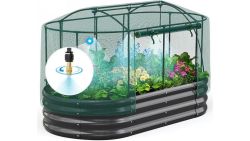
If you’re a busy gardener, the Quictent galvanized, oval raised bed gives you a low‑maintenance garden with a built‑in misting unit that keeps plants consistently moist—so you can set it and forget it while you handle other chores. Your bed measures 6 by 3 feet and stands 1 foot tall. Polished, dark‑grey steel resists rust, while reinforced crossbars lock joints firm. An open base drips excess, safeguarding roots. The misting nozzle sprays fine cloud, cooling leaves and keeping soil from cracking. Mesh guards against birds but still lets light in. Assembly is sturdy for kids, pets, and moving goods.
Best For: busy gardeners who want a low‑maintenance, self‑watering bed that’s safe for children and pets.
Pros:
- Built‑in misting unit delivers consistent moisture and cooling for plants.
- Open base and reinforced crossbars prevent root rot and add structural strength.
- Anti‑bird mesh lets light in while providing pest protection.
Cons:
- The open base can cause water spillage when overwatering.
- The 3‑ft width limits space for larger arrangements or crop rotation.
- The misting system requires occasional cleaning to keep the nozzle clear.
https://www.amazon.com/dp/B0C23GLHLW
Self-Watering 8×4 Raised Garden Bed

Busy homeowners craving a lush garden without endless watering will find this 8 × 4 raised bed a game changer. Each square foot offers a deep, open‑bottom design that encourages roots to grow straight into the earth, while drainage keeps excess moisture out. The galvanized steel frame weighs just 38.6 lb, granting stability against wind and rain, and its rust‑resistant finish guarantees years of use. A built‑in hose delivers spray irrigation, evenly moistening soil and cutting daily watering to a minimum, while the full‑coverage PE cover traps heat and shields from wind. Open‑bottom simplicity keeps soil, while zipper access eases care daily.
Best For: Busy homeowners who want a deep, self‑watering raised bed that stays stable in changing weather and requires minimal daily hose work.
Pros:
- Robust galvanized steel frame (38.6 lb) resists rust and wind, ensuring long‑lasting stability.
- Built‑in spray hose and natural drainage keep soil consistently moist, cutting down on daily watering.
- Full‑coverage PE canopy with zipper access traps heat, protects from wind, and lets you easily tend plants.
Cons:
- Limited to an 8 × 4 ft footprint, which may not accommodate larger gardens.
- The weight and frame size require a solid foundation or ground stakes for optimal stability.
- Initial cost may be higher than standard raised beds, and the self‑watering system can be less intuitive for some users.
https://www.amazon.com/dp/B0G6Z2667V
Galvanized Raised Garden Bed with Self-Watering

For over‑shortened necks and wrinkled backs, the 32‑inch‑high legs of this galvanized raised garden bed give you a comfortable planting height that’s hard to beat.
You’ll grow veggies and flowers outdoors with the 48‑by‑24‑by‑56‑inch frame, while the built‑in spray irrigation keeps soils moist without daily watering.
You’ll notice drainage holes let excess water escape, and the bottom non‑woven layer catches retained moisture, preventing waterlogging.
A PE greenhouse cover shields plants from wind, cold, and overheating, while two mesh windows provide ventilation that extends the growing season.
Finished with galvanized panels, the frame resists rust and supports strong root systems.
Best For: people who want a durable, self‑watering garden bed that keeps plants healthy with minimal effort, such as home gardeners, balcony cultivators, or beginners looking for a low‑maintenance setup.
Pros:
- Built‑in spray irrigation system delivers even watering, reducing the need for daily maintenance.
- 32‑inch high legs provide ergonomic planting height, minimizing back strain.
- Heavy‑duty galvanized frame resists rust and supports robust root growth.
Cons:
- The PE greenhouse cover can limit airflow if plants are over‑crowded or the weather is very hot.
- Requires an external power source or batteries for the spray irrigation system.
- Larger footprint may not fit small patios or cramped balcony spaces.
https://www.amazon.com/dp/B0G6YS9Q83
YITAHOME 96x48x24 Galvanized Raised Garden Bed Kit

With a 2‑ft elevated height and a rugged galvanized frame, this raised garden bed lets you grow fruits, veggies, and flowers effortlessly—ideal for anyone who prefers to keep plants within arm’s reach instead of bending over. YITAHOME’s 8‑by‑4‑foot kit features a 479‑gallon soil capacity, giving you ample space for herbs, tomatoes, and annuals. Its galvanized metal shell, reinforced with crossbars, delivers strength and durability that withstands the elements, while the edge‑curl rim and rubber strip provide safety support. The open base allows excellent drainage and nutrient absorption, and the included ground stakes secure the structure during windy conditions. Build confidence.
Best For: gardening enthusiasts who want an easy, low‑bending raised bed that offers 479 gallons of space for vegetables, herbs, and flowers.
Pros:
- Heavy‑duty galvanized frame with reinforced crossbars ensures durability.
- 2‑ft elevated height reduces back strain for all skill levels.
- Simple assembly (15–30 minutes) suitable for DIY beginners.
Cons:
- Bottom board not supplied, requiring additional purchase or DIY solution.
- Open base needs careful filling; must avoid overfilling to preserve drainage.
- Size (8×4 ft) is large, may need dedicated space or a strong patio foundation.
https://www.amazon.com/dp/B0F1K2DGWQ
ANLEOLIFE 12-Piece Galvanized Raised Garden Beds

The ANLEOLIFE 12‑piece kit turns any garden edge into a set of sturdy, 18‑inch‑high beds that give you comfortable, hand‑level access to plants. Each 18‑inch‑deep bed holds up to 60 bags of mix, letting you grow tomatoes, peppers, greens, and root veggies. The kit’s 12 units offer oval, heart, and round beds, letting you’ll design a fence line or garden focus. It’s made of thick, galvanized steel with a multi‑layer finish, beds resist sun, rain, snow, and temperature swings year‑after‑year. Assemble each bed in 30 minutes; the remaining 11 follow the pattern, giving you weekend build or phased setup.
Best For: gardeners and homeowners who want durable, hand‑level beds that are easy to assemble and versatile enough for fence lines or patio landscaping.
Pros:
- Galvanized steel construction resists corrosion and weather for a long life.
- Modular oval, heart, and round shapes allow creative patterns and “bottomless” installation for easy drainage.
- Each bed can be assembled in about 30 minutes, with the rest following the same quick pattern.
Cons:
- The heavy metal frame can be difficult to move once installed.
- The system lacks integrated irrigation, so plants must be watered manually.
- Compared to wood or composite options, the initial purchase price is higher.
https://www.amazon.com/dp/B0DPQG23JZ
KING BIRD Raised Garden Bed with Irrigation

Gardeners who crave low‑maintenance while still enjoying fresh produce will love the KING BIRD’s integrated drip system, which cuts routine watering by roughly 90 percent. Its sleek 70.9‑inch length, 22.8‑inch width, and 31.5‑inch height give you an 11.8‑inch‑deep, 10.8‑cubic‑ft space that handles 80 gallons of soil and 600 pounds of plants without wobbling. Built from galvanized steel, its rust‑resistant frame and 30‑inch ergonomic height keep you comfortable and guarantee durability longer than timber beds. The smart drip installs simply—no concrete, just legs. With multiple drainage holes and a non‑woven liner, roots breathe and moisture stays, so your garden thrives indoors or outdoors.
Best For: gardeners who want a low‑maintenance, durable raised bed that saves watering effort and fits indoor or outdoor settings.
Pros:
- Built-in smart drip system cuts watering time by about 90 %.
- Galvanized steel frame offers rust‑resistant strength and a 600‑lb load capacity.
- 30‑inch ergonomic height reduces back and knee strain during planting.
Cons:
- Higher initial price compared to traditional wood beds.
- 11.8‑inch depth may be too shallow for certain root‑deep plants.
- Metal frame can become hot on direct summer sun, potentially stressing plants.
https://www.amazon.com/dp/B0FVVNV5DW
Vego 8ft x 2ft Metal Raised Bed

If you need a low‑bending solution that still offers plenty of root space, the Vego 8ft × 2ft metal raised bed delivers with 17‑inch depth and 23 cubic‑foot capacity. You’ll assemble it without tools or expertise—just piece panels together and clip fasteners. The dust‑free, oval design shields hands from sharp edges. Its rust‑resistant VZ 2.0 composite and powder‑coat hold up for 20 years, proven by USDA and Texas A&M tests. With 23 cubic‑foot soil, you grow everything from tomatoes to tulips, all while keeping your back and wrists strain‑free. Accompanying accessories—covers, composters, and trellises—expand your garden’s versatility and sustainability for every season year‑round growth.
Best For: Busy home gardeners who value a low‑bending, long‑lasting raised bed with ample root space and instant assembly.
Pros:
- 17‑inch depth allows generous root growth for a wide variety of plants.
- VZ 2.0 composite and powder‑coat deliver 20‑plus‑year rust resistance, proven by USDA and Texas A&M tests.
- Tool‑free assembly with clip‑fasteners makes setup quick and user‑friendly.
Cons:
- The 2‑ft width may limit spacing for larger plants or companion planting.
- Heavy metal construction can be difficult to move or reposition once filled.
- Higher upfront cost compared to lighter or simpler wood‑based raised beds.
https://www.amazon.com/dp/B09FPXQGL5
Keter Urban Bloomer 12.7‑Gallon Raised Garden Bed Self‑Watering

Looking for a low‑maintenance solution that lets you grow fresh herbs even on a balcony, the Keter Urban Bloomer’s built‑in self‑watering reservoir keeps moisture steady and cuts back on daily watering. This dark‑grey, elevated planter holds 12.7 gallons of soil, fits a 32.3″ × 14.7″ × 30.7″ footprint, and supports two levels of roots. Its heavy‑duty, UV‑protected resin body resists sun, rain, and temperature shifts while staying rust‑free. A built‑in gauge shows moisture instantly, and an adjustable drainage port lets you keep roots dry enough. It comes with a seed‑starting tray, works for herbs, veggies, or flowers, and offers a two‑year warranty for you.
Best For: balcony gardeners who want an easy, low‑maintenance herb or vegetable container that stays consistently moist and has a sleek, modern look.
Pros:
- Self‑watering reservoir reduces daily watering and helps prevent over‑watering.
- Built‑in moisture gauge offers instant feedback on soil dryness.
- UV‑protected, heavy‑duty resin construction resists sun, rain, and temperature changes for long‑term durability.
Cons:
- Limited 12.7‑gal capacity may be too small for larger plants or multi‑row setups.
- Adjustable drainage port requires occasional fine‑tuning for optimal root moisture.
- Only one color option (dark grey) limits design flexibility.
https://www.amazon.com/dp/B079SQRL46
2-Pack Galvanized Steel Raised Garden Beds

This 2‑pack of galvanized steel raised garden beds delivers a low, ergonomic 31.5‑inch height that’s a dream for seniors and anyone with chronic back pain. Each unit holds up to 400 lb of soil and plants, giving you a sturdy foundation that won’t buckle. The design includes five drainage holes and two flow channels, while a mesh bottom keeps soil in place, preventing root rot and waterlogging. Anti‑slip foot pads secure the beds on any surface, and a built‑in bottom shelf stores your watering gear. Assembly takes about 30 minutes, and tools are included, so you can set up alone.
Best For: seniors and anyone with chronic back pain looking for a low‑to‑the‑ground raised garden bed that reduces strain and keeps plants easily accessible.
Pros:
- Robust galvanized steel and mesh bottom support heavy loads and prevent root rot.
- Convenient anti‑slip pads and built‑in storage shelf keep the beds stable and tools handy.
- 2‑pack design gives double planting area and fast set‑up with included tools.
Cons:
- Heavy and bulky; may require a little effort to move into position.
- Mesh bottom can clog over time if not cleaned regularly.
- Limited to 400 lb capacity per bed, which may be insufficient for very dense soil mixes.
https://www.amazon.com/dp/B0G7VFVQT6
5×3×1.4FT Galvanized Raised Garden Bed Kit

Whether you’re a beginner or an experienced cultivator, the 1.4‑ft galvanized bed keeps soil at a knee‑high level that reduces back and knee strain, making gardening accessible to everyone. This rectangular kit measures 5 × 3 ft and stands 16.5 in tall, built from lotus‑green, rust‑resistant steel. Its panels—available in four modular sizes—fuse with butterfly‑nut fasteners, so you assemble the bed in about 30 minutes without any special tools. Finished with rubber‑trim edges and open bottoms, it drains efficiently, cutting watering downtime while keeping soil evenly moist. The stainless‑steel pull rod eases setup, and the included gloves make handling soil a breeze today.
Best For: gardeners of all skill levels who want an easy‑to‑assemble, ergonomic, rust‑resistant raised bed that saves time and reduces back pain.
Pros:
- Quick, tool‑free setup in under 30 minutes with butterfly‑nut fasteners and a stainless‑steel pull rod.
- Modular panel options let you customize square or rectangular layouts to fit any outdoor space.
- Lotus‑green, galvanized steel finish resists rust, corrosion, and harsh weather, ensuring long‑term durability.
Cons:
- The open‑bottom design means you’ll need a drip tray or rain barrel to catch excess water and prevent soil spillage.
- The bed’s size is limited to 5 × 3 ft per set, so extensive gardens require multiple kits or larger panels.
- Without built‑in shade or cover, the bed’s plants may need additional protection during extreme heat or storms.
https://www.amazon.com/dp/B0FQBYJ9B4
Vengarus Galvanized Raised Garden Bed 48x18x30in

Considering a durable, compact planter that still holds plenty of load, the Vengarus 48×18×30in galvanized raised bed is ideal for balcony growers or small back‑yard enthusiasts. You’ll love the 48‑inch depth and 18‑inch width, giving plenty space for tomatoes, herbs, or a small fruit tree. The 30‑inch height shelters roots from drafts and keeps soil steady. Each bed can hold 300 lb, so you can layer rich compost without worry. Finished in stainless‑steel‑coated, corrosion‑resistant steel, it stays solid in humid conditions. Rounded, padded corners protect against chipping, and included mounting hardware lets you assemble it tool‑free in minutes, right away today.
Best For: balcony and small backyard growers who need a durable, high‑capacity raised garden bed for tomatoes, herbs, or small fruit trees.
Pros:
- Heavy‑duty stainless steel construction with full galvanization for exceptional corrosion resistance.
- Tool‑free assembly with all hardware included, making setup quick and hassle‑free.
- Spacious 48×18×30 in. dimensions and 300 lb load capacity allow layering rich compost and supporting a variety of crops.
Cons:
- The overall weight of 37 lb could be difficult to move for some users.
- Slightly higher price point compared to basic plastic or wood options.
- Limited to rectangular shape; may not fit tight or oddly shaped spaces.
https://www.amazon.com/dp/B0FZKS8MR5
Self-Watering Raised Garden Bed with Lockable Wheels

Garden lovers who crave low‑maintenance, hands‑free cultivation will appreciate PatioZen’s self‑watering raised bed, complete with lockable wheels for effortless repositioning. You’ll enjoy its 43.3‑inch length, 17.7‑inch width, and 33.7‑inch height, weighing 23.4 lbs—compact enough for patios yet spacious for vegetables and flowers. The rust‑resistant frame and built‑in wheels enable quick moves, while the hydroponic‑style reservoir and moisture gauge keep roots hydrated without you lifting a thumb. A drainage plug lets you fine‑tune flow, and the unit’s power options—municipal or solar—boost energy efficiency. Install in minutes; it comes with an extended warranty, support, and a sturdy, weather‑proof chassis for plant care.
Best For: busy homeowners and small‑space gardeners who want a low‑maintenance, hands‑free watering solution in a compact yet spacious raised bed.
Pros:
- Automatic self‑watering keeps roots consistently moist, cutting down on manual watering.
- Lockable wheels allow easy repositioning and secure anchoring on patios or balconies.
- Built‑in moisture gauge and adjustable drainage plug give precise control to prevent over‑watering.
Cons:
- Requires a continuous power source (municipal or solar), adding upfront cost and wiring effort.
- The 23.4‑lb weight can be burdensome to lift when the bed is full of soil.
- Narrow width (17.7 in) limits planting large vegetable rows, best suited for compact arrays.
https://www.amazon.com/dp/B0G4ZQKKV2
SUNYRISY Galvanized Raised Garden Bed with Arch Trellis

If you’re a balcony gardener hungry for vertical space, the SUNYRISY Galvanized Raised Garden Bed with Arch Trellis delivers a rust‑resistant, 87‑inch high trellis that lets your tomatoes, beans, and herbs climb toward the sky.
Your kit contains two roomy beds, an 87‑inch arch, and a climbing net for stability. The metal frame’s plastic coating blocks rust, rain, snow, and sun. An open base provides proper drainage, keeping roots healthy and preventing waterlogging. Easy instructions let you set it up in minutes, and customer support backs you. It’s perfect for tomatoes, beans, herbs—maximizing vertical space and boosting daily yields.
Best For: balcony gardeners, small‑space growers, and DIY enthusiasts who want a durable, expandable vertical trellis for tomatoes, beans, herbs, and flowers.
Pros:
- Heavy‑duty galvanized steel frame with protective plastic coating resists rust and weather damage for long‑term durability.
- Open‑base design delivers superior drainage that prevents waterlogging and root rot, keeping plants healthy.
- Easy, tool‑free assembly in under a few minutes with clear instructions and a supportive customer service team.
Cons:
- The 87‑inch height may be too tall for very low balcony pavers, limiting placement options.
- Lack of built‑in container base or irrigation system requires extra containers or DIY watering solutions.
- The netting used on the arch can become tangled or dusty and may need occasional cleaning.
https://www.amazon.com/dp/B0GDDXBY3Y
VECELO 5-Tier Vertical Garden Bed

Your balcony will love the five staggered planter boxes of the VECELO 5‑Tier Vertical Garden Bed, giving you a compact yet expansive growing area ideal for apartment and patio growers. Each 5‑level box measures 23.23 × 8.27 × 5.71 in., so you can plant herbs, veggies, flowers, even strawberries with plenty of light and airflow. The metal frame and PP boxes resist rust, UV, and stains, holding 19 lb of soil and plants. Four smooth casters let you glide it anywhere; two locks keep it steady. Built‑in drainage keeps roots dry, and easy‑removal boxes simplify repotting and cleaning. Enjoy year‑round gardening bliss daily.
Best For: apartment and balcony growers who want a compact, mobile, and durable vertical garden that supports multiple herbs, veggies, or flowers in a space‑saving design.
Pros:
- Five staggered tiers provide ample growing area while keeping the unit compact for small spaces.
- Heavy‑duty metal frame with rust‑resistant polypropylene boxes ensures long‑term outdoor durability.
- Four casters with two locks allow easy relocation yet provide stable positioning.
Cons:
- 19 lb weight can be a bit heavy to lift onto higher shelves or stairs.
- Removing and cleaning every tier requires a moderate effort when all 5 levels are full.
- Set‑up still requires some assembly time and a suitable parking spot for the base.
https://www.amazon.com/dp/B0GMW3GR7W
Onelike Plastic Raised Garden Bed with Greenhouse Cover

The Onelike Plastic Raised Garden Bed with Greenhouse Cover is built with a zip‑sealed door and adjustable vent, giving you a pest‑free, climate‑controlled space wherever you’ll choose to grow. Measuring 80 in by 16 in across 55.5 in tall, its black polyethylene frame and plastic base weigh just 41 lb, making it sturdy yet portable. The UV‑resistant cover features 25 % recycled material, shielding plants from sun, rain, and indoor humidity while letting light in. A built‑in reservoir stores excess water, and four drainage holes keep moisture at ideal levels, preventing root rot. Assembly is tool‑free, expandable, with a reinforced trellis and 30‑day return.
Best For: gardeners who want a portable, low‑maintenance raised bed with integrated greenhouse protection and self‑watering support.
Pros:
- Tool‑free, quick assembly making it ideal for beginners or seasonal setups.
- Built‑in reservoir and drainage holes provide reliable moisture control, preventing root rot.
- UV‑resistant, recycled polyethylene cover offers protection in varied climates while staying lightweight.
Cons:
- The black plastic may darken soil and reduce daylight penetration under the cover.
- Limited height (55.5 in) might restrict large plants or taller trellises.
- Expanding the footprint requires additional units, adding cost and complexity.
https://www.amazon.com/dp/B0F5P5SH28
Factors to Consider When Choosing Raised Garden Bed System
You should first decide on the size and footprint that fits your space and leaves room for walking or other plants. Next, examine the material’s durability—look for sturdy woods or recycled composites that can withstand weather, and check water‑management features and drainage design to keep soil healthy. Finally, pick a system that’s easy to assemble, with clear instructions and a design that lets water flow out without excess pooling.
Size And Footprint
Because careful calculation of total planting area underpins an effective garden bed, we multiply the bed’s length by its width to gauge exactly how much soil life‑supporting space we’ll secure—an 18‑sq ft platform in this case—before adding a safety margin of 2‑3 ft all around. You’ll then check the depth‑to‑height ratio: a 12–18 in deep base suits many species, while a 8–10 in minimum fits herbs. Remember to leave 2–3 ft of clearance all sides, more if you’ll maneuver a hose. Align the bed shape with your yard: rectangular mirrors your patio, oval cuts corners better if you’re tight. Finally, adjust height—18–20 in alleviates strain for most adults, but someone limited in reach might need a lower model. So size determines how many plants fit and your maintenance effort.
Material Durability
Durability metrics decide how each material’s lifespan is quantified, guiding the choice of substrates for a raised garden bed system. When you pick galvanized steel, expect 20–30 years of rust resistance with minimal upkeep, far outpacing untreated wood that may rot in just 3–5 years in humid places. The wall thickness matters: a 1 mm steel frame carries roughly 400 lb of soil and plants, while a 0.5 mm wall can buckle. Composite panels with zinc–aluminum or epoxy coatings stay moisture‑impermeable, lasting 15–20 years and avoiding swelling. Concrete beds offer 50 plus years, but they need proper curing and occasional sealants. Finish choices also matter; UV‑stable vinyl, resin, or paint blocks discoloration for at least ten years, unlike untreated plastics that degrade after 5–7 years. Pick wisely and your garden beds will stay strong.
Water Management Features
Shifting from material durability to water management, the design hinges on a built‑in misting system that delivers uniform moisture across the soil surface, keeping dry spots at bay and sustaining seedling vigor. The open‑bottom, non‑woven liner scores with multiple drainage holes, letting excess water escape swiftly and boosting oxygenation for root depth. A self‑watering reservoir or adjustable drainage port lets you gauge moisture, preventing over‑watering. Coupled with a roof containing ventilation gaps, the system traps humidity like a greenhouse while permitting airflow. A visible water gauge or sensor in the pump window instantly informs you when the soil is too wet or too dry, so you can adjust their levels and keep plants thriving. And achieve higher yields with lower effort every season today.
Ease Of Assembly
If you want to get started quickly, choose a kit that arrives pre‑drilled and fully packaged so you can assemble a complete bed in 15–30 minutes with a single wrench. Tool‑free designs like butterfly‑nut or press‑fit connectors mean you never need a special wrench—just your hands and a quick press. Modular panels allow you to start small, then hook in extra boards later without taking apart the first set, preserving your initial build. Look for kits that include clear, step‑by‑step illustrations or video links; these visuals help you avoid common mistakes and speed up the process. Reinforced crossbars and snap‑in corner pieces give instant stability, so you don’t have to wait days for the structure to hold firm. Choosing a kit with these features lets you set up, plant, and enjoy a thriving garden in a fraction of the time, and watch growth flourish today.
Drainage Design
Because proper drainage keeps roots healthy, you’ll want to design the base of your raised bed so water flows freely. Open‑base construction lets excess water seep through the outer board, keeping roots dry and encouraging deeper growth. Place 4–5 evenly spaced 3‑mm drainage holes in the lower panel to allow airflow and avoid waterlogging. Lining the soil with a non‑woven fabric keeps earth in place yet lets moisture escape, cutting upkeep. Adding a mesh screen or perforated sheet over the base not only boosts drainage but also keeps pests out without blocking airflow. Finally, use a sloped or perforated bottom board 4–6 inches deep; this directs runoff toward a drainage area or rain barrel, ensuring your beds stay dry for best growth and long term.
Mobility Options
How do you decide which mobility features to prioritize for your raised garden bed? Consider caster size and load rating: standard 3‑inch wheels hold up to 200 lb each, while 4‑inch or larger ones support 400 lb, easing movement on uneven ground. If you’ll sit on a sloped deck, lockable casters keep the bed from rolling and preserve a level planting height. Adjustable legs can level floors with up to 6 in variance, preventing damage to turf or the frame. Expect 30–60 ft of smooth travel before tires noticeably wear; rubber‑tipped wheels cut deck wear by 40 % and stay clean on concrete or tile. Choose wheels that suit the space and soil weight, and pair them with casters to keep your beds moving throughout the gardening season.
Weight Capacity
When you lift a raised bed, you’ll see that its weight capacity sets the upper limit for how much soil, mulch, and plants you can safely load. A bed must carry its full load plus a 1.5–2.0 safety margin. For a 4‑ft × 8‑ft bed to 1‑ft depth (≈3,840 lb of loose soil), choose a frame rated 500–600 lb. Galvanized steel with cross‑bar reinforcement typically supports 350–400 lb, ideal for 30–35 cu ft of compost‑rich soil plus mature plants. Deeper beds or vertical walls raise capacity to 600–700 lb. Seedling trays or greenhouse covers demand at least 450 lb. Always pick a frame rated at least 1.2 times the peak expected load. By checking these figures before purchase, you’ll avoid costly structural failures and keep your garden healthy and productive year after year again.
Maintenance Effort
If you pick a system that incorporates a self‑watering feature, you’ll cut your daily watering routine to once every 7–10 days, freeing up hours for other tasks. An open‑bottom design lets excess moisture drain naturally, reducing the need to scrub clogged drains or repot soil for rot. Integrated mesh panels keep insects and birds out, eliminating the routine to spray pesticides or trim overgrown foliage for pest control. Rounded, recessed edges protect tools and gloves, so you rarely clean up sharp‑edge injuries. Modular, tool‑free assembly with butterfly nuts or pre‑drilled bolts keeps fasteners accessible, letting you replace panels quickly and keep maintenance hassle‑free. These streamlined features mean you dedicate more time to enjoying your harvest and less to day‑to‑day upkeep and garden maintenance daily.
Frequently Asked Questions
How Often Should I Replace or Add Topsoil in a Raised Bed?
Every 2-3 years, you’ll refresh your raised bed with fresh topsoil. Clear out old seed hulls, weeds, and clods, then thoroughly layer 2‑3 inches of nutrient‑rich soil. If you notice poor drainage or compacted layers, add a few inches more. This keeps plants healthy and yields high. Check moisture and nutrient levels annually, and top up as needed. Remember, consistent topsoil renewal guarantees stronger turf and fewer issues every season.
What Is the Best Way to Prevent Soil Compaction Over Time?
Sure, if you want your soil to behave like a stubborn stone monument, just ignore the age-old trick of aerating. But seriously, you’ve got to prevent compaction by rotating crops, using organic mulch, and digging shallow holes weekly. Add a layer of compost to give roots breathing space. Keep the bed elevated, never overload it, and let the plants breathe. That’s the best way to keep soil airy for term.
Can I Grow Potatoes in a Self‑Watering Raised Bed?
Yes, you can grow potatoes in a self‑watering raised bed. Fill the bed with loose, well‑draining loam, mix compost, and plant seed potatoes 4 inches deep. As the bed waters itself, keep the soil consistently moist but not soggy. Fertilize lightly each month, and add mulch to lock in moisture. Rotate crops annually, and harvest when skins harden—then enjoy crisp, fresh potatoes straight from your garden for dinner and salads.
How Do I Secure a Raised Bed Adjacent to a Fence or Wall?
Picture your bed as a loyal knight beside a castle wall: to keep it steady, you anchor it with L‑shaped brackets and heavy‑duty screws, then add a horizontal brace extending from the fence. Use 2‑inch wood stakes driven into the concrete fence post, and you’ll secure the bed frame with straps. This way the bed stays just like a knight staying true to its post, through these steps, you guarantee.
What Winter Care Is Needed for Metal Raised Beds?
You’ll clean your metal raised beds of leaves, twigs, and debris before winter and apply a rust‑preventing primer or paint to protect against corrosion. Keep them off the ground by placing insulation or a plastic sheet underneath to avoid frost heaving. Cover the beds with a breathable tarp or frost blanket to reduce temperature swings, and remove the tarp when temperatures rise to prevent mildew be in the early spring.
Conclusion
You’ve looked at galvanized and self‑watering options. Next, test each bed’s water‑retention in a few weeks; the theory that self‑watering saves effort holds when you see less evaporation. Sketch a simple flow diagram of your garden’s nightly irrigation. Compare the cost, size, and crop output of two models. The evidence will guide you to the kit that truly grows with minimal fuss, turning your plan into thriving reality and you’ll enjoy effortless growth every season.
Introducing Maria, our meticulous planner and talented visual storyteller. She has a knack for discovering those hidden gems, chic boutique spots, and charming little cafes that add a touch of elegance to every journey. With her keen eye for photography and her passion for travel, Maria will transport you to the most enchanting corners of the world, inspiring you to explore new places, one picture-perfect destination at a time.
Bed Depth, Irrigation Tips, Raised Bed Gardening