Tag: Energy efficient laundry

Heat Pump Dryers That Cut Energy Bills and Gently Dry Clothes

When you choose a heat‑pump dryer, you’ll lower your electric bill by up to 50% while keeping fabrics soft and wrinkle‑free. Midea and LG offer 4.4‑cubic‑foot stackable units that fit under washers and use ventless tech. Samsung’s 4‑cu‑ft model edges out cooling with a 40‑minute Express cycle, and LG’s ThinQ Wi‑Fi lets you monitor cycles remotely. Each builds on low‑power use and gentle drying. Check the spec sheet to see how they stack up today.

Key Takeaways

  • Heat‑pump dryers eliminate ducts, cutting power usage; many ENERGY STAR models achieve up to 50 % less energy than conventional electric condensers.
  • Smart sensor‑dry cycles stop when clothes are dry, preventing over‑drying and extending garment life.
  • The compact footprint (~24 × 24 in) lets you stack the dryer under a washer or in a closet, saving space for larger families.
  • Samsung’s reversible door accommodates counter or cabin layouts, making the dryer suitable for tight or unconventional rooms.
  • With 4–4.4 cu ft capacity, LG and Midea offer Wi‑Fi controls for remote monitoring, fitting most household loads while keeping energy bills low.

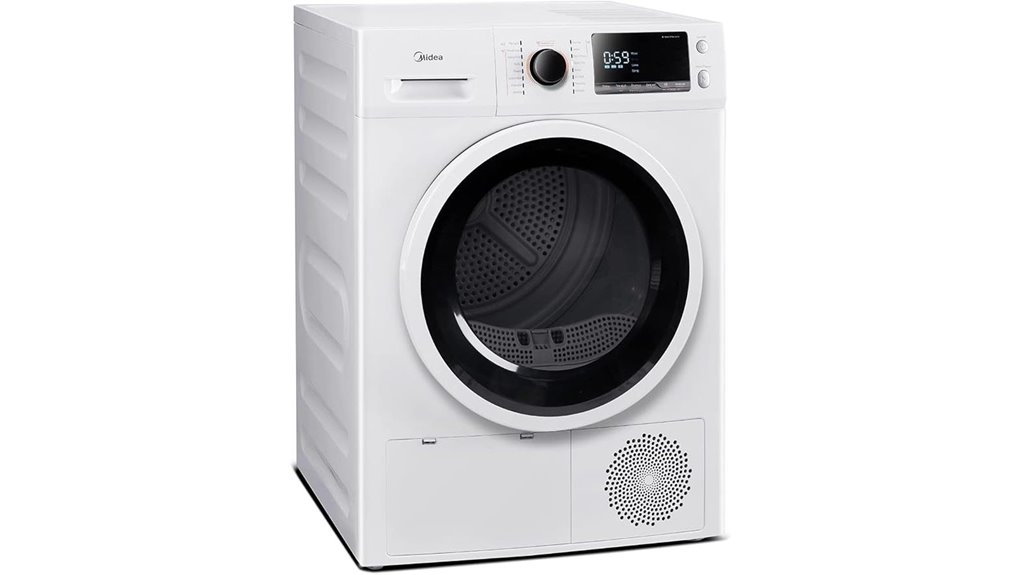
Midea Heat Pump Stackable Washer-Dryer 4.4 cu ft

midea heat pump washer dryer

If you’re squeezing laundry into a tight apartment, RV, or dorm room, the Midea MLE25H7BWW stackable washer‑dryer grabs your attention because it’s ventless—no external ductwork, no wall height limits, just a 4.4‑cubic‑foot drum that flexes to fit beside your washer. Compact at 22.5 inches deep, 23.5 wide, and 33.5 tall, it stacks neatly over a washer, saving space while still handling 4.4 cubic feet of laundry. Its heat‑pump dryer runs on 240 volts and needs no vent, making the whole unit ENERGY STAR qualified and 28% more efficient than traditional models. It also offers a one‑year warranty, backup hoses.

Best For: Space‑constrained living situations like apartments, RVs, and dorm rooms that need a compact, ventless washer‑dryer solution.

Pros:

  • Ventless heat‑pump design eliminates ductwork, saving space and simplifying installation.
  • ENERGY STAR‑qualified with 28 % lower energy consumption than conventional dryers.
  • Advanced moisture‑sensing and “Dry Smart” modes reduce over‑drying, lower energy use, and the wrinkle‑care feature shortens post‑wash prep.

Cons:

  • Requires a dedicated 240‑V outlet, often necessitating a separate circuit or electrician assistance.
  • The 4.4‑cu‑ft drum is modest, limiting heavy‑load capacity compared to larger dryers.
  • One‑year manufacturer warranty and limited public support documentation may be less reassuring for long‑term ownership.

https://www.amazon.com/dp/B0BJ6ZCHWX

Samsung 4.0 Cu Ft Stackable Heat Pump Dryer

samsung stackable heatpump dryer

For apartment owners who want a dryer that cuts energy bills without crowding the laundry area, the Samsung 4.0‑cu‑ft heat‑pump model is the clear winner. Its 4‑cubic‑foot drum fits snugly, with dimensions of 26 in. depth, 24 in. width, and a 35‑inch height—perfect for cramped spaces. It uses a heat‑pump to cut power by half. The reversible door lets you open it side‑to‑side or upwards, adapting to your counter or cabin layout. Its 40‑minute Express Cycle dries a 2‑lb load quickly, and Sensor Dry stops over‑drying to protect fabrics. It’ll keep your loads soft and light, even on higher heat settings.

Best For: apartment owners who need a compact, energy‑efficient dryer that fits tight spaces and reduces electric bills.

Pros:

  • Energy‑efficient heat‑pump design cuts power usage by up to half compared to electric dryers.
  • 4‑cu‑ft drum and reversible door suit compact laundry rooms or small units.
  • Sensor Dry and a 40‑minute Express cycle keep fabrics soft and avoid over‑drying.

Cons:

  • Limited drum capacity may require multiple loads for larger families.
  • Warranty only 1 year, which is shorter than some competitors.
  • Heat‑pump dryers can be slower on larger loads compared to conventional electric models.

https://www.amazon.com/dp/B0BG71BXMW

LG Smart Ventless 24-inch Dryer 4.2 cu ft

lg 24 inch smart dryer

Because its ventless heat‑pump design lets you dry up to 8.45 lb in a single load without a vent, the LG DLHC1455W is the go‑to choice for apartments or tight laundry rooms.

Fit it in a closet or stack it with an LG washer: the 4.2‑cu‑ft, 24‑inch dryer saves space. Inverter Heat Pump cuts energy, while the Smart Heat Pump’s moisture‑recycling loop boosts efficiency. Sensor‑Dry auto‑adjusts cycle time, and the Wi‑Fi ThinQ app lets you monitor and start remotely. Weighing 127.9 lb, it has a door comes white or graphite steel. A one‑year warranty and 30‑day Amazon return offer peace of mind.

Best For: apartment dwellers or anyone with limited space who still needs a high‑capacity, energy‑efficient drying solution without venting.

Pros:

  • Ventless heat‑pump design saves space and skips the need for an external dryer vent.
  • Smart Heat Pump and Sensor‑Dry technology reduce energy consumption and automatically adjust cycle times.
  • Wi‑Fi ThinQ app offers remote monitoring, starting, and alerts for added convenience.

Cons:

  • Heavier and larger footprint (127.9 lb) can add load on closet or floor space.
  • 1‑year manufacturer warranty is relatively short compared to some competitors.
  • Requires compatible LG washer for optimal stacking or side‑by‑side setup.

https://www.amazon.com/dp/B0BJ7T1SL6

SMETA Heat Pump Ventless Electric Dryer 24-in Compact

smeta ventless 24 inch dryer

The SMETA T‑DDF‑100ALBMU(HP)-US offers a compact 24‑inch front‑load design that’s perfect for apartments, RVs, and other tight spaces where a full‑size dryer just doesn’t fit. Its 4.4‑cu‑ft drum holds everyday family loads, while the 25.7‑in × 23.4‑in × 33.5‑in footprint keeps it portable and stackable. Heat‑pump technology recycles heat for low power use, and the sensor‑dry feature tailors time and temperature to moisture levels, protecting fabrics. With 12 preset cycles—including silk, towels, and baby clothes, a 30‑minute Quick Dry, you get quick, gentle results. UL listed, it’s safe, reversible, and easy to install in any kitchen or laundry nook, it delivers energy bills.

Best For: Compact space owners—such as apartment dwellers, RV families, or small-home users—who need an energy‑efficient, front‑load dryer that fits a tight footprint.

Pros:

  • Compact 24‑inch design fits tight spaces.
  • Heat‑pump technology delivers low energy consumption.
  • 12 preset cycles and sensor‑dry ensure gentle, protective drying.

Cons:

  • Higher upfront cost compared to basic ventless dryers.
  • No built‑in smart connectivity or app control.
  • Drum capacity limited to 4.4 cu ft.

https://www.amazon.com/dp/B0CLGRTPDP

KoolMore 24″ Ventless Heat Pump Dryer (White)

koolmore 24 inch white dryer

You’ll appreciate the KoolMore FLD‑5CWHP’s ventless heat‑pump design, letting you dry clothes indoors without needing an external vent. Its 24‑inch footprint and 4.4‑cubic‑foot drum fit snugly into apartments, RVs, or tight spaces. You can choose from 16 smart preset cycles, including wrinkle‑release and auto‑stop, so your laundry finishes just right. Energy‑Star certification cuts power draw, while a zinc‑coated drum keeps heat evenly distributed for delicate fabrics. You’ll love the front‑load motor that runs silently and automatically. Plus, it’s stackable with the matching FLW‑3CWH washer for a complete unit. Experience lower utility costs and gentler care for your favorite clothes daily.

Best For: apartment dwellers, RV owners, and anyone needing a compact, ventless dryer that saves energy and protects delicate fabrics.

Pros:

  • 🔋 Energy‑Star heat‑pump design eliminates venting, cutting electricity usage and utility bills.
  • 🏠 24‑inch, 4.4 ft³ drum fits tight spaces and is stackable with the matching washer for a complete unit.
  • 🤖 16 smart preset cycles, wrinkle‑release, and auto‑stop cycles protect clothes and reduce dry‑time.

Cons:

  • ⚖ 122‑lb weight can be cumbersome to move or install.
  • 🔧 Limited to 240 V circuits, which may not be available in all homes.
  • ⏱ 1‑year parts & labor warranty may be short compared to some competitors.

https://www.amazon.com/dp/B09R2BVN3S

Kenmore 4.0 cu ft Ventless Front Load Dryer

kenmore 4 0 ventless dryer

Looking for a dryer that fits into tight spaces without a vent? The Kenmore Ventless Compact Front‑Load Dryer packs a 4.0‑cu‑ft drum into just 24×23.5×33.2 inches, weighing 46 lb. It uses a ventless condensing system, so you can place it anywhere in a studio, basement, or condo. Energy‑Star certified, it offers 15 cycles, three temperature settings, and an Express Dry for 12 minutes on a handful of shirts. The smart sensors gauge moisture, preventing over‑drying, while Wrinkle Guard tucks fabrics after the cycle. An LED display and touch controls show real‑time status, and easy internal drainage keeps maintenance low today.

Best For: renters, studio dwellers, or anyone needing a compact, ventless dryer with Energy‑Star efficiency and a variety of cycle options for everyday laundry.

Pros:

  • Condensing, ventless design lets you place it anywhere—no extra installation or vent‑pipe required.
  • 4‑cu‑ft capacity fits a good amount of household fabrics while the 15‑cycle selection and Express Dry (12 min) serve both routine loads and quick touch‑ups.
  • Smart moisture sensors and Wrinkle Guard help preserve fabrics and reduce shrinkage, while the LED display and touch controls keep operation simple.

Cons:

  • Limited 4‑cu‑ft drum may be too small for bulky items like comforters or large family loads.
  • The appliance weights 46 lb, which can be cumbersome to move or stack compared to lighter models.
  • Lacks Wi‑Fi connectivity or advanced smart home integration; you’re limited to the basic touch‑control interface.

https://www.amazon.com/dp/B0DL7XDZSS

LG Front Load Washer & Dryer Stackable Set

lg front load stackable set

If you’re a small‑space dweller, the LG WKHC252HWA WashTower delivers a ventless heat‑pump dryer that cuts energy use and frees your ceiling. Stacked front‑load washer and dryer fit snugly, occupying only 32.75 in. wide and 74.38 in. tall. Its 5‑cubic‑foot drum, made of NeveRust stainless steel, guarantees durability and gentle care. Smart Wi‑Fi lets you control TurboWash™ and steam options from your phone. The washer offers six programs, including a 10‑minute TurboWash, while the dryer offers a heat‑pump cycle plus five standard settings. Automatic detergent dispensing streamlines loads, and the unit’s ENERGY STAR rating guarantees low annual consumption—just 365 kWh. for reduced cost savings.

Best For: the best for small‑space homeowners who want a space‑saving, energy‑efficient laundry setup with smart Wi‑Fi control and durable construction.

Pros:

  • Ventless heat‑pump dryer eliminates vent installation and saves ceiling space.
  • Smart Wi‑Fi, TurboWash™, and steam options let you manage loads conveniently from a phone.
  • NeveRust stainless‑steel drum ensures durability while gently caring for fabrics.

Cons:

  • 1‑year manufacturer warranty is shorter than some competitors, which may raise concerns about long‑term support.
  • The total unit weight (353 lbs) can make installation and moving more difficult.
  • Limited to a 120 V power supply, which could be an issue in older homes with different electrical setups.

https://www.amazon.com/dp/B0FTBR1K8C

BLACK+DECKER 4.4 Cu. Ft. Electric Dryer

black decker 4 4 cu foot dryer

Ideal for homeowners who lack a vent line, this 4.4‑cu‑ft dryer uses heat‑pump technology to recycle air and cut electric use by up to 28 % compared with vented units, earning Energy Star certification. Its 4.4‑cu‑ft drum holds up to 22 lb of laundry, while the front‑load opening lets you see a rust‑resistant, zinc‑coated stainless‑steel tub. With 16 cycle options—including My, Active Wear, and Sanitize—and sensor‑dry control, it tailors heat precisely to moisture levels. A 240 V/60 Hz circuit plus professional hard‑wiring is required, and the included water tank drains condensate. A 1‑year warranty and 30‑day return cover you; ISTA‑6A packaging protects during transit.

Best For: homeowners without a vent line who want a quiet, energy‑efficient dryer that still offers plenty of cycle options and can handle up to 22 lb of laundry per load.

Pros:

  • Heat‑pump technology cuts electric use by up to 28 %, Energy Star‑certified.
  • 4.4 cu‑ft drum holds 22 lb of laundry, with a clear front door to view the load.
  • 16 smart cycle choices and sensor‑dry control tailor heat to exact moisture levels.

Cons:

  • Requires professional hard‑wiring to a 240 V/60 Hz circuit.
  • Heavy (121 lb) and bulky, making installation and relocation difficult.
  • One‑year limited warranty may be short compared to some competitors.

https://www.amazon.com/dp/B09NM47QXM

Factors to Consider When Choosing a Heat Pump Dryer

When picking a heat pump dryer, size matters first: match its capacity to your typical laundry load so you don’t overrun or underutilize it. Compare Energy Efficiency ratings—look for higher HERS or SEER values to cut running costs, and decide between ventless or condensing models based on your space and venting options. Finally, evaluate smart connectivity for remote control and choose a model whose footprint and installation steps fit your apartment or home layout.

Capacity And Load Size

Most families find a drum size between 4.0 and 4.5 cubic feet to be the sweet spot for everyday laundry. You’ll want to match the dryer’s capacity to your weekly load volume. A 4.0‑cu‑ft drum works well for households of two to three doing one full load a day, while a 4.4‑to 5.0‑cu‑ft model suits families of four to five to avoid double runs. Loading more than 70‑80 % of its capacity can extend drying time by 15‑25 % and erode heat‑pump savings. Running under 50 % wastes power, though many models offer auto‑start and delay‑start options to curb that. Remember bulkier items need the whole drum, while light clothes can be folded tighter. Consider your typical laundry weight and fabric type, as they determine the space needed per cycle.

Energy Efficiency Ratings

You’ll notice a heat‑pump dryer typically uses about two kilowatt‑hours per cycle—roughly half the energy of a conventional condenser dryer. Because these units tap residual heat through a compression‑refrigeration cycle, they cut energy use by about 28 % compared with conventional electric‑heater dryers. ENERGY STAR‑certified models meet strict federal benchmarks, often delivering a 30 % lower power draw than the national dryer average. A built‑in humidity sensor constantly adjusts temperature and time, so the machine stops pre‑heated air cycles when the load is dry, saving power you’d otherwise waste. Together, these features make heat‑pump dryers real savings champions, translating to noticeably lower monthly bills and a smaller carbon footprint without sacrificing drying performance. Give yourself peace of mind knowing each wash hits the right balance and efficiency.

Ventless Versus Condensing

If you’re looking to choose between ventless and condensing heat‑pump dryers, the key distinction lies in how each unit recycles heat and handles moisture. Ventless models pull humid air from the drum, compress it, then decompress the air, turning moisture into a drip that exits through a dedicated line or feeds directly into your plumbing. Because the heat‑pump uses a refrigeration cycle, it keeps the cycle short, cycling air at higher temperatures and saving about 28 % energy versus standard vented units. Condensing units, meanwhile, rely on an electric heating element and a conventional condenser. They collect water in a built‑in tank or use a hose, then either drain it to a sink or spill into a receptacle. If your space can’t accommodate a vent, ventless is the cleanest choice; if a simple drain port is acceptable, condensing is compact and still vent‑free and less hassle for you.

Smart Connectivity Features

Having chosen a ventless or condensing heat‑pump dryer, you’ll want to zoom in on the level of smart connectivity the unit offers. A Wi‑Fi‑enabled model lets you start, pause, and finish cycles from your smartphone and you can monitor real‑time moisture levels. Voice assistants, like Alexa or Google Assistant, allow you to schedule runs or check status with a simple voice cue. The built‑in sensors upload usage data to the cloud, giving manufacturers the data needed for firmware updates that boost energy efficiency and extend the dryer’s lifespan. Remote diagnostics in the app reveal error codes and suggest fixes, cutting on‑site service calls. Push notifications alert you when a cycle ends or when maintenance, such as lint filtering, is due and streamline laundry routine.

Space And Installation Needs

Since a ventless heat‑pump dryer eliminates the need for a vent line, the appliance can sit directly above a washer or inside a closet, cutting installation complexity and saving space. Typical models measure 25–27 inches deep, 23–24 inches wide, and 33–35 inches high, letting you stack or run side‑by‑side in laundry rooms only 12–14 feet wide. Drum capacities of 4.0–4.4 cubic feet fit compact footprints, while the range of 46 to 127 pounds dictates floor‑load limits. A reversible door lets you orient it forward or sideways, easing placement in tight spots. Models with a 4‑wire plug tap into a standard 240‑V outlet, avoiding hard‑wiring hassles. This flexibility helps you maximize limited cabinets, avoid bulky vent kits, and keep your laundry area tidy, and reduce overall costs today.

Frequently Asked Questions

How Long Does a Heat Pump Dryer Last Compared to Vented Models?

A heat pump dryer typically lasts 10–15 years, often outlasting vented models that usually hit 7–10 years. You count on its efficient, sealed design, which reduces wear on internal components. Your drum turns with fewer harsh blows, and the compressor stays cooler, cutting failure points. Still, regular maintenance extends life, so cleaning filters and checking for leaks keeps your unit running smoothly for a decade or more daily with care.

Are Heat Pump Dryers Approved by All Building Codes?

Yes, heat‑pump dryers generally meet most residential code requirements, but approval depends on your local jurisdiction and whether you’re installing in a dwelling or a commercial building. They satisfy the International Residential Code’s venting and ventilation standards, and many states have adopted them as acceptable appliances. Still, always check your city’s regulations or consult a licensed installer to confirm compliance before purchasing, and follow all requirements that your municipality specifies.

What Is the Noise Level During Operation?

Did you know nearly 90 % of homeowners dread the roar of a conventional dryer? That’s why you’ll find heat‑pump models operating at just 55–65 decibels, roughly the noise of a normal conversation. You’ll hardly notice the spin, and during the cycle the fan stays below 60 dB, making laundry time relaxed rather than disruptive. Quiet, efficient, and surprisingly gentle. This makes weekends feel lighter, and your neighbors thank you, and peace.

Can I Use a Heat Pump Dryer Outdoors or Only Indoors?

You’ll only use a heat‑pump dryer indoors. Heat‑pump units rely on a controlled environment and efficient condensation drainage; exposing them to outside temperatures and wind can clog the condensate system, damage electronics, and lower drying performance. For best results, place the dryer on a flat, dry floor with ample airflow, and keep vents free of debris. Outdoor placement risks safety hazards and voids your warranty today for your long life.

How Does a Dryer’s Moisture Output Affect Surrounding Appliances?

Your dryer’s moisture output raises local humidity, which can condense on nearby appliances. When that water droplets accumulate, they can corrode metal parts and damage electronics. Sensitive devices—like fridges, HVAC units, or kitchen appliances—might experience short‑circuits or reduced efficiency. You’d keep a good ventilation system effectively or use a moisture‑capturing condensate trap to shield the surrounding equipment. Additionally, high humidity can accelerate mold growth on cabinet surfaces, compromising appliance longevity.

Conclusion

Did you know that a heat‑pump dryer can slash energy costs by up to 40 % compared to a conventional vented unit? By combining gentle drying with smart airflow, these models keep your linens soft while trimming your bill. If you stack one into your laundry room, you’ll free up space and boost efficiency. Choosing a well‑rated appliance not only preserves the planet but saves you money each month by choosing a certified ENERGY STAR product.