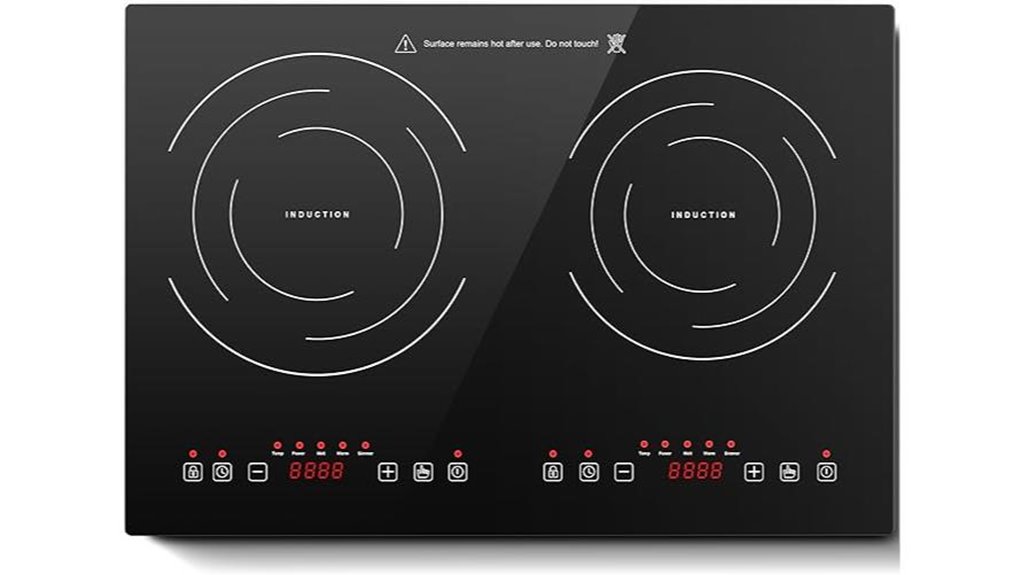
Built-in Style Induction Range: The Kitchen Upgrade You Need
You’re ready to upgrade with a built‑in induction range that slashes cooking times thanks to up to 90 % heat transfer. With options from a 2‑burner 120‑V cooktop featuring 18 levels to a 36‑inch TECASA, you get precise control and child‑safety locks. Models like ThermoMate’s 4‑burner boost, Empava’s Auto RapidHeat, and VoltCuisine’s sleek design meet both power and style. Curious about breaking down the differences? You’ll find the answer and more advanced tips next and beyond.
Key Takeaways
- Select a range matching your kitchen size: 120‑V 2‑burner for small cabinets or 240‑V 4‑ to 5‑burner for full‑size homes.
- Power capacity ranges from 3,600 W to 10,800 W, providing enough heat for every cooking task.
- Built‑in safety locks, auto‑shutdown, and residual‑heat indicators keep kitchens safe and energy‑efficient.
- Independent timers up to 99 min and boost modes deliver precise cooking control with quick‑start heating.
- All models include a 1–2 year warranty, ENERGY STAR certification, and manufacturer support.
2-Burner 1800W Induction Cooktop, 18 Levels, 120V

If you cook in a small kitchen and value precision, this 20‑inch, 1800‑W induction range delivers: each of its two burners offers 18 power levels, so you can hit the exact heat you need—whether you’re simmering a sauce or searing a steak—without the electric surge. It has a ceramic glass surface that stays crack‑free after pots. Both burners share 3600 W total, but you control each smoothly via touch‑sensitive LEDs. Seven temperature tiers span 120‑460 °F, and auto‑warm, melt, and simmer modes let you manage delicate sauces. Child‑safety locks, a 1‑min to 179‑min timer, and automatic pan detection keep everything safe.
Best For: small‑kitchen cooks who value precise heat control and safety in an induction range.
Pros:
- Dual 1800 W burners with 18 adjustable settings for exact heat control.
- 20‑inch polished ceramic glass that remains crack‑free and easy to clean.
- Built‑in child‑safety lock, automatic pan detection, and timer for secure operation.
Cons:
- Requires a dedicated 120 V, 20 A breaker; may be impractical for some countertop setups.
- No power boost beyond 1800 W per burner, limiting large‑pot or high‑heat tasks.
- Limited to magnetic cookware, so non‑magnetic pots cannot be used.
https://www.amazon.com/dp/B0D4JVGZPW
ThermoMate 30″ Induction Cooktop with 4 Boost Burners

This 30‑inch ThermoMate induction cooktop packs four high‑output boosters that hit 2400 W instantly, giving you the fastest heat‑up for searing, sautéing, or boiling.
Totaling 7200 W, each zone provides 2000 or 2400 W on the large burners and 1600 or 2000 W on the small ones, all powered by 240 V AC. The 30.3 W×20.5 D×2.3 H unit slippers a two‑inch‑thick ceramic‑glass surface, for magnetic cookware. With nine power levels and a five‑minute boost, you can sear, sauté, or simmer. Lock, temperature alerts, and keep‑warm keep food safe. The sleek black finish fits slots, ships with a template and warranty guide to satisfy your culinary ambitions.
Best For: Home chefs who want rapid, precise induction cooking with four burners, from casual stir‑fries to commercial‑grade searing.
Pros:
- 7200 W total output with four high‑output burners and a 5‑minute boost for fast heating.
- Nine precise power levels, independent timers, and keep‑warm function give full control over cooking.
- Touch‑sensor interface, child lock, auto‑shutdown, and over‑heat protection provide robust safety.
Cons:
- Requires a dedicated cut‑out and 240 V AC supply, limiting placement options.
- Only works with magnetic cookware; non‑magnetic pots trigger a “Uu” flag.
- High power draw can increase electricity costs on extended use.
https://www.amazon.com/dp/B0CWGFJYR8
30″ 4-Burner Induction Cooktop – 6600W

Whether you’re a culinary enthusiast craving turnaround speed or a homeowner who values a sleek, space‑saving appliance, the 30‑inch VoltCuisine SR‑84‑3 delivers exactly that. This built‑in cooktop fits flush into your countertop, offering 30‑inch width and a sleek black crystal glass surface that wicks away spills. With four burners totalling 6600 W and nine power levels, you can sear, simmer, or boil precisely while the touch interface keeps control handy. Safety features—child lock, overheat protection, residual‑heat indicator, and auto‑shutoff—give peace of mind. Its scratch‑and stain‑resistant modern glass stays clean with a wipe. VoltCuisine backs it with warranty and 220‑V compatibility.
Best For: Professional chefs and serious home cooks who require precise, quick heat and a sleek, space‑saving design.
Pros:
- Rapid, precise heating with 9 power levels, offering exact control for searing to simmering.
- Built‑in safety features such as child lock, overheat protection, and automatic shutoff keep the kitchen safe.
- Scratch‑ and stain‑resistant black crystal glass surface is easy to clean and maintains a modern look.
Cons:
- Requires a 220‑V electrical supply, which may need upgrading in older homes.
- No visible flame can make it harder for beginners to gauge flame intensity without reading the display.
- Higher price point compared to standard electric or gas ranges, driving up upfront cost.
https://www.amazon.com/dp/B0F26J6L91
Empava 36” Induction, Auto RapidHeat, Pan Sensor

For busy home chefs who need lightning‑fast, precise heating, the Empava 36″ induction blows up your cooking with Auto RapidHeat, instantly firing the 11,400 W elements and then quietly dropping power when the pan hits the right temperature.
Your 36‑inch surface glows in sleek black, fitting cleanly into drop‑in kitchens. Glide‑touch controls let you adjust 17 power levels plus Boost in seconds, while the preset Melt, Keep Warm, and Simmer modes keep recipes on track. Bridge‑SYNC integration handshakes other inductive elements for seamless multi‑device use. Pan Sensor soothes fire‑starter anxiety, auto‑deactivating when the core reaches target heat for your meals every time.
Best For: busy home chefs who need lightning‑fast, precise heating and multi‑device compatibility.
Pros:
- Instant high‑power bursts for rapid pre‑heating and an instant drop to safe levels.
- 17 customizable power levels plus a Boost option for fine‑tuned control.
- Pan sensor auto‑detects core temperature and shuts off to prevent over‑cooking.
Cons:
- Requires hardwired installation; not portable or plug‑and‑play.
- 1‑year manufacturer warranty may not meet long‑term resale expectations.
- Lacks smart connectivity and no price‑match portal or automatic price tracking.
https://www.amazon.com/dp/B0FZK7NNR9
TI-2B 23″ Dual Burner Induction Glass-Ceramic Cooktop

Built on a compact 23‑inch footprint, the TI‑2B delivers dual‑burner induction power that’s perfect for apartment chefs who need space savings and precise temperature control. You’ll get 1,750‑W total power, split between burners via 100/0, 80/20, or 50/50 modes. Dishes stay under 450 °F, safeguarding pots. The black Schott‑Ceran glass is scratch‑, chip‑and shatter‑resistant, so a damp cloth does the job. When you remove cookware, it switches off automatically, and the EZ‑touch child lock keeps it shut. Lightweight at 18 lb, it’s easy to relocate—great for dorms, cabins, or RVs. Two‑year warranty covers you. You’ll also love the quick‑start feature today.
Best For: apartment chefs, college dorm students, and RV travelers who need a compact, portable dual‑burner induction cooktop.
Pros:
- Dual 1,750 W induction burners with adjustable power‑sharing modes for precise cooking.
- Automatic shut‑off, child‑safety lock, and 450 °F temperature limit enhance safety.
- Scratch‑, chip‑ and shatter‑resistant Schott‑Ceran glass surface that cleans with a damp cloth in seconds.
Cons:
- Requires a standard 120 V outlet—no power boost for high‑volume cooking.
- Small 23‑inch footprint may not accommodate larger pots and pans.
- No built‑in ignition; must use compatible magnetic cookware to trigger the induction.
https://www.amazon.com/dp/B0087OWY5A
36-Inch TECASA 5-Burner Induction Cooktop

The 10,800 W output of its five induction burners lets you run several pans at once, ideal for households that need to station multiple dishes simultaneously. This 36‑in. range boasts 90 % energy transfer, so it boils a liter of water in just three minutes. With a 208–240 V rating, each burner offers nine power levels, a 99‑minute timer, and a child lock. The glass‑crystal plate tolerates 66‑lb pots and reaches 1472 °F. Safety shines with auto‑shutoff, spill detection, and residual‑heat warnings. Weighing 43 lb and covered by a one‑year warranty, it’s a bold upgrade. Its sleek exterior blends effortlessly with modern kitchens today.
Best For: busy families or home chefs who need to cook several dishes simultaneously and value high energy efficiency and safety features.
Pros:
- 10,800 W total output allows multitasking with up to five pots.
- 90 % heat transfer efficiency cuts cooking time and energy use.
- Intuitive touch‑control, 99‑min timer, and child lock enhance user convenience and safety.
Cons:
- Heavy (43 lb) and bulky, making installation and relocation difficult.
- Requires a 208–240 V supply, limiting use in garages or older homes without voltage upgrade.
- One‑year warranty may feel short compared to higher‑end induction ranges.
https://www.amazon.com/dp/B0DSFS48R5
Frigidaire 30″ 4-Burner Induction Range

If speed matters, the Frigidaire 30‑inch 4‑burner induction range slashes cooking time by heating cookware directly—boiling up to 50 % faster than most electric or gas counterparts. Its sleek front‑control panel and stainless‑steel finish fit any kitchen décor, while the 5.3‑cubic‑foot oven lets you roast a turkey and bake cupcakes on separate racks simultaneously. The induction burners harness magnetic technology, delivering precise heat that stays within the pot, plus a bridge element so you can spread a griddle across two zones. A convection fan circulates hot air, ensuring even browning and cutting baking time. Cleaning stays effortless; the cool surface wipes clean, and the one‑touch self‑clean oven removes baked‑on residue. Storage beneath keeps pots organized, and the 162‑lb stainless unit is sturdy yet stylish now you.
Best For: the kitchen enthusiast who needs fast, precise cooking and easy cleanup in a stylish, spacious range.
Pros:
- Rapid induction heating cuts cooking times by up to 50% compared to standard electric or gas ranges
- Built‑in convection fan and bridge element allow multi‑rack baking and large griddles simultaneously
- One‑touch self‑clean oven and cool, wipe‑clean surface make maintenance effortless
Cons:
- 162‑lb weight makes installation and handling more difficult
- Requires induction‑compatible cookware, which may need additional purchase
- Higher upfront cost compared to conventional electric ranges
https://www.amazon.com/dp/B0CNL8Z13R
Factors to Consider When Choosing a Built‑In Style Induction Range.
First, think about the range’s power capacity and output; higher wattage means faster preheating, while a size that fits your oven cavity provides easy installation. So, evaluate the user‑interface features—intuitive controls and clear displays—along with safety protections such as child locks and automatic shut‑off for peace of mind. Finally, check the energy‑efficiency rating; look for a solid SEER score or ENERGY STAR certification to keep running costs low while you cook.
Power Capacity & Output
Because power capacity determines how many burners you can run simultaneously, choose a range whose total wattage matches your cooking habits—3,600 W suits a two‑burner model for one or two people, while 10,800 W supports a family‑style five‑burner setup. When you buy, note each burner’s individual output: you’ll find 1,800 W to 2,400 W per zone, adjustable in 100‑W steps. Most models also feature a boost mode that ramps a single burner to full power for 3–5 minutes, perfect for bringing a pot to a boil quickly. Power distribution across the stovetop can split output—often 70/30 or 50/50—so you can run zones without overloading the feed. Don’t forget electrical circuit: a 3,600‑W range needs a 20‑A breaker, and a 10,800‑W unit demands a 50‑A circuit to stay safe.
Size and Compatibility
When you pick a built‑in induction range, its width—usually between 20 and 36 inches—must neatly fit the prepared cabinet opening. Remember the cut‑out is 1–2 inches smaller to leave space for the control panel and mounting hardware. Match the stove’s electrical rating to your breaker: a 3600 W cooktop needs a 120 V/20 A circuit, while 7200‑ to 11 000‑W models require a 240 V/30 A line. Verify the cabinet height provides at least a 5 mm vertical clearance and a 2‑inch air gap for ventilation. If you choose an ultra‑thin panel—≤ 3 inches—ensure the cabinet depth can accommodate it; otherwise, electrical gaskets may misalign or trigger a dwell fault. Verify a 5 mm clearance above the stove for hinged or slide‑out storage. Double‑check installer instructions against your electrical box—mismatches can disable the unit.
User Interface Features
How easy is it for you to see and adjust each burner on a built‑in induction range? A touch‑sensor panel lights up with distinct, back‑lit LEDs for every zone, letting you dial power from 100 W up to 1800 W or more with a simple slide. You can set per‑burner timers—anywhere from 1 min to 99 min—and activate a keep‑warm mode so pans stay hot without constant monitoring. A residual‑heat sensor instantly turns off burners once cookware is removed, signaling the surface is cool before you touch it. For quick bursts, “boost” or “auto‑galaxy” options fire maximum power, flashing a unique icon so you know which burner is firing. These intuitive cues make cooking feel more precise and hassle‑free. You’ll appreciate how seamlessly they integrate into daily routines.
Safety Protections and Locks
If you appreciate the precision of those touch‑sensor controls, safety becomes the essential layer you’ll want to evaluate next. First, built‑in child safety locks on the panel seal the interface until you release them, so your little ones can’t flick on a burner by mistake. Next, an automatic shutdown cuts power when you lift cookware, stopping heat without manual hit. Over‑temperature sensors keep the surface from reaching dangerous levels, tripping a shut‑off when needed. Pan detection demands a magnetic pot; if you put the wrong pan or none, the zone simply stays off. Finally, a residual‑heat indicator warns you that the glass still glows hot, preventing accidental burns after you finish cooking. These safeguards give you peace of mind that every cooking session stays safe and child‑proof.
Energy Efficiency Ratings
You’ll want to check the efficiency rating when selecting a range, because induction technology can convert up to 95 % of input energy into useful heat. That means a typical built‑in induction unit keeps 90–92 % of supplied power as heat during steady‑state operation, whereas electric resistance or gas burners only manage 30–50 %. Even with 6 kW, 8 kW, or 10 kW outputs, modern coils and drivers limit losses to under 5 % at full power. Manufacturers list annual kWh estimates based on standardized cooking cycles, letting you compare ranges in real‑world usage. Higher efficiency models can lower your yearly energy costs by a few hundred dollars over time, substantially. Plus, many models feature auto‑regulating power scaling and standby controls that drop idle consumption below 0.5 W, cutting overall energy use.
Installation Requirements
Since a built‑in induction range relies on a dedicated 240‑V supply, you’ll need a separate circuit—typically a 30‑A breaker for a four‑burner model or 20‑A for a dual‑burner—installed per NEC §210.24 with proper grounding and over‑wire sizing. Make sure your countertop cut‑out matches the unit’s specified dimensions—for example, 28.94 in. W × 19.5 in. D × 2 in. H—so the range aligns and stands securely. If your model has a built‑in convection oven, install a vent hood that can handle at least 10 in. WC of static pressure and provide 18 in. of clearance behind the handle to maintain airflow. Keep at least 4 in. of floor clearance around the range for heat dissipation, and a 2 in. buffer along the perimeter enables cleaning and allows for thermal expansion. All these steps meet NEC requirements safe performance.
Warranty and Support
A built‑in induction range’s warranty typically spans one to two years, covering defects in materials and workmanship while excluding normal wear and misuse. You’ll receive a prorated credit or replacement for power‑output parts like induction coils or control electronics that fail early. Most manufacturers provide telephone or online help for quick fixes, and dispatch a technician for on‑site repairs of hardware issues. Retailers often offer a 30‑day or 90‑day return window, so you can get a refund if the unit is unused and fully documented. Extending coverage is optional: flat‑fee plans add years of protection and may offer free part replacements or priority scheduling. When budgeting, compare baseline versus extended costs and prioritize the parts most critical to your cooking routine, and enjoy peace.
Built‑In Design Style**
Choosing the right built‑in induction range means balancing form and function. Most models sit at 30 inches wide, with a slightly smaller countertop cut‑out—around 28.94 inches—to allow a flush‑mount finish. The cooktop extends right to the edge, so it blends seamlessly into your cabinetry, giving a clean, uninterrupted look. A high‑tempered, scratch‑resistant glass‑ceramic slab—often black or clear—matches the countertop’s finish and adds a modern edge. Control panels float or integrate into the molding, cutting out seams and keeping the profile sleek. Remember, built‑ins are power‑hardwired, so you’ll need a dedicated 208‑240 V, 50 A circuit and a concealed cord path behind the walls for safety. Choose a design that fits your kitchen’s aesthetics, does the work safely, and marries clean lines to practical power needs and today.
Frequently Asked Questions
Can Built‑In Induction Ranges Fit Standard Kitchen Cabinets?
Yes, built‑in induction ranges can fit standard kitchen cabinets. They usually come in standard widths—30, 36, or 42 inches—so you’ll slot them into the existing space. Just measure your cabinet depth, which is typically 24 inches, and confirm the range’s depth is 24 or 26 inches for a snug fit. Check the manufacturer’s clearance specs, and you’ll enjoy a seamless, upgraded look. Also, installations require no rewiring if you have connectors.
What Copper Cable Gauge Is Needed for a 30″ Induction?
Like a fearless athlete powering through a marathon, your induction demands unstoppable juice. You’ll need 6 AWG copper cable to keep that 240‑V, 50‑A load humming smoothly. Make sure you run a proper circuit breaker, and double‑check the manufacturer’s spec. If you opt for heavy‑duty plumbing, 4 AWG could shave off a whisper of voltage drop, but 6 AWG is the sweet spot for most kitchens and they’ll really impress every gourmet colleague.
Are Induction Ranges Compatible With Voice‑Controlled Assistants?
Yes, most modern induction ranges work with voice‑controlled assistants like Alexa, Google Assistant, or Siri. You can turn the oven on or off, set temperatures, and check timers by voice. Some newer models come with built‑in Wi‑Fi, right‑click buttons, and a temperature chest. You just link the range to your smart hub and give it the right app permissions. Most kitchens will be ready in minutes and enjoy hassle‑free cooking.
How Do I Maintain the Glass‑Ceramic Surface?
Picture a Roman legionnaire wrestling a stubborn sauce on your induction’s glass‑ceramic surface. To keep it gleaming, you wipe daily with a microfiber cloth and mild dish soap, never harsh abrasives. For tougher stains, mix equal water and vinegar, apply gently, then dry. Avoid leaving food residue overnight—scrape promptly. Heat it only when needed, and let cool before cleaning. You’ll preserve its glossy sheen and guarantee safety at all times.
What Warranty Does the Manufacturer Provide for Induction Ranges?
The manufacturer provides a two‑year limited warranty on parts and labor, covering defects and manufacturing faults. It also offers five years on the heating element and up to ten years for the control board. You can claim service through their authorized network, and if the unit fails, they’ll replace or repair it at no charge. Check the manual for exact terms, and keep your purchase receipt for quick access today.
Conclusion
Choosing the right built‑in induction range feels like picking the perfect spice—each model brings a distinct flavor to your kitchen. With 2‑burner, 4‑burner, and 5‑burner options, you can match the size and power to your cooking style. Remember that wattage, booster settings, and safety features are your recipe’s hidden ingredients. When you fire up the turn‑on button, you’ll taste confidence, and your meals will always rise to the occasion, like a seasoned gourmet, always daily.

Introducing Maria, our meticulous planner and talented visual storyteller. She has a knack for discovering those hidden gems, chic boutique spots, and charming little cafes that add a touch of elegance to every journey. With her keen eye for photography and her passion for travel, Michelle will transport you to the most enchanting corners of the world, inspiring you to explore new places, one picture-perfect destination at a time.