Built-in Style Coffee Stations That Elevate Your Kitchen
Looking for a kitchen upgrade? You can bring café vibes with built‑in coffee station that blends style, lighting, and power. The Homieasy Farmhouse Bar offers sleek LED strips, adjustable shelves, and built‑in charger—no tools needed. VASAGLE’s 71‑inch pantry adds touch‑controlled lights, multiple outlets, and modern aesthetic. C‑shaped side table under sofas features single‑port charger. Pair it with modular fridge‑bar and you have versatile décor‑enhancing hub. Discover how each piece transforms your space for your home.
Key Takeaways
- Seamless integration with cabinetry creates a cohesive, elegant look, enhancing kitchen aesthetics without compromising functionality.
- Dual‑purpose units combine coffee prep with a mini‑fridge, maximizing utility while saving counter space.
- Built‑in charging stations with dual USB ports and surge protection keep devices powered safely during use.
- Customizable shelving and hook systems provide flexible storage for mugs, kettles, and accessories.
- Touch‑activated LED lighting in warm 2700‑3000 K hues enhances ambiance and visibility without cluttering.
Homieasy Farmhouse Coffee Bar Cabinet w/ LED Lights

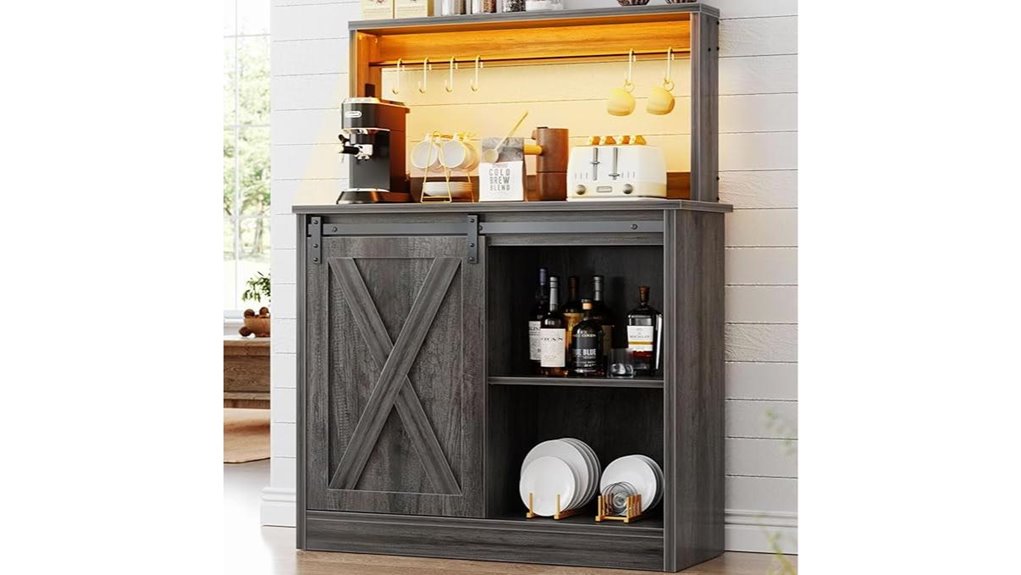
If you’re a coffee enthusiast who needs a practical hub for your home, the Homieasy Farmhouse Coffee Bar Cabinet with LED Lights is a no‑doubt must. Its black‑oak finish and oil‑rubbed frame create a rustic farmhouse vibe, while the sliding barn door keeps the space tidy. Warm LED strips beside the shelves set an inviting evening mood. Inside, you’ll find three adjustable shelves plus a tabletop option for tools or drinks. The built‑in charging station powers devices standby. No‑tool assembly and a freestanding footprint make moving it simple. It works as a coffee bar, wine rack, or buffet display.
Best For: coffee lovers and home baristas who want a stylish, functional storage unit with built‑in charging.
Pros:
- Rustic black oak finish and sliding barn door create an inviting farmhouse vibe
- Warm LED strips set a cozy evening mood and highlight display items
- No‑tool, floor‑mounted assembly offers quick setup and easy relocation
Cons:
- Limited depth (16″) may restrict storage of larger kitchen appliances
- Only one door may be inconvenient when multiple items need quick access
- Built‑in charging station can be noisy if devices are charging simultaneously
https://www.amazon.com/dp/B0F9KLN3LP
VASAGLE LIRY 71-inch Kitchen Pantry with Lights

Looking for a sleek, dual‑purpose spot to keep your coffee ritual organized? The VASAGLE LIRY 71‑inch pantry marries rustic appeal with tech convenience. Its flat‑panel doors sport a white finish that fits kitchen. Inside, six adjustable shelves, a drawer, and four deeper compartments store mugs, bags, and more. An adjustable LED light offers three hues and a touch‑controlled brightness for perfect lighting. A built‑in charging station supplies two AC outlets for phone, kettle, or grinder. It functions as pantry and coffee bar, perched on a sturdy pedestal base that locks to the floor, style. For use, it brings flair.
Best For: coffee lovers who want a chic, multifunctional pantry that also serves as a convenient charging station for their kitchen gadgets.
Pros:
- Sleek rustic design that complements a variety of kitchen styles.
- Built‑in adjustable LED lights and dual AC outlets add modern convenience.
- Six adjustable shelves, a drawer, and deep compartments offer versatile storage.
Cons:
- Particleboard construction may feel less premium than solid wood.
- Assembly is required and can be time‑consuming for some.
- The unit’s weight and height limit placement options in smaller kitchens.
https://www.amazon.com/dp/B0CHW5K9KL
C-Shaped Couch Side Table with Built-in Charger

Designed for the modern multitasker, this C‑shaped couch side table keeps you powered up without the clutter of cables, making it perfect for anyone who works from the sofa, hosts quick meals, or simply wants a tidy living space.
Blacked out for style, its shape fits décor. A steel frame and engineered wood top guard drinks, snacks, and laptops alike. Slip it under a sofa, use it as a coffee‑tray, or make a desk while you “work from home.” Assembly takes minutes—no tools, few hooks. With a 44‑lb limit, your living space stays neat, and your devices stay charged.
Best For: working professionals, casual gamers, and anyone who wants a clutter‑free, versatile surface on the couch or bed.
Pros:
- Built‑in charging station eliminates cable clutter and keeps devices powered.
- C‑shaped design slides under furniture, saving floor space while scaling a 44‑lb load.
- Lightweight (3 lb) yet sturdy frame and waterproof wood top protect against spills.
Cons:
- Single charging port may be insufficient for multiple devices at once.
- The fixed height may not accommodate taller laptops or standing desks.
- Limited surface area may feel cramped for larger laptops or multi‑item setups.
https://www.amazon.com/dp/B0FDL57M7D
Farmhouse Coffee Bar Cabinet with Mini Fridge

Start your mornings with a farmhouse coffee bar that doubles as a mini fridge—ideal for the host who wants rustic charm and a touch of convenience. Its wooden frame and flat‑panel black exterior give you a classic barn‑door look, while the engineered‑wood top keeps it sturdy and scratch‑resistant. At 49.2 inches wide, 23.6 deep, and 41.7 high, it fits comfortably in most spaces, and the 120‑pound weight gives you solid stability. Its mini‑fridge measures 21 inches wide, 24.4 deep, 34.33 high, perfect for keeping milk, coffee pods, craft beer chilled for you. USB ports and outlets keep devices charged.
Best For: hosts who want a rustic, multifunctional coffee bar that also serves as a mini fridge, providing convenience and a farmhouse aesthetic for kitchens, dining rooms, or bar areas.
Pros:
- Dual-purpose design combining a coffee bar and mini fridge, saving counter space.
- Built‑in power outlets, USB ports, and a charging station keep devices powered and organized.
- Durable, scratch‑resistant engineered‑wood construction with a stable freestanding frame.
Cons:
- Heavy (120 lb) and requires strong floor support for stability.
- Assembly needed; although instructions are clear, it can still be time‑consuming for DIY beginners.
- Limited fridge space (21 × 24.4 × 34.33 in.) may not accommodate larger beverage storage needs.
https://www.amazon.com/dp/B0GJZDD6ZH
Factors to Consider When Choosing a Built-In Style Coffee Station
First, you should check that the station fits your space—measure carefully so it doesn’t crowd your flow. Then, pick materials that stand up to daily use and match the kitchen’s look for seamless cohesion. Finally, make sure the design offers built‑in power access and flexible storage options to keep everything organized and ready to brew.
Space Planning Essentials
Because a built‑in coffee station must fit smoothly into a kitchen layout, you should start by measuring the wall length and ensuring at least 48 inches of vertical clearance and 24–36 inches of horizontal space for door swing. Next, carve a 12–18 inch wide niche for your coffee maker, leaving 6 inches in front for cables and venting. Place shelves 24 inches deep on each level; keep a 12‑inch overhang above seating for easy serving. Leave an 8‑inch gap between the unit’s lower edge and plumbing fixtures to allow maintenance and protect against leaks. Verify that outlets sit no more than 8 inches from the counter and that appliances have at least 6 inches of ventilation clearance. These measurements guarantee your coffee station blends and style without compromising space or safety.
Material Durability Matters
Several key factors determine how long a built‑in coffee station endures daily use. You find that hardwood panels—oak or walnut—thickened to three‑quarters inch and finished with oil or varnish withstand hot cups and espresso machines for years. Engineered wood cabinets embossed with melamine or a high‑heat thermoset laminate can endure temperatures up to 120 °C, preventing warping by kettles or coffee makers. A wood top, glazed with polyurethane, resists moisture and survives thousands of spills; lab tests show 1‑inch‑thick panels withstood two million drop impacts with no swelling. Load capacity hinges on density: an oak frame at 250 lb supports a full rack, while MDF maxes at 150 lb before cracking. Sealing edges with polyurethane or silicone cuts moisture ingress by roughly 30 %, extending cabinet life longer.
Built‑In Power Options
When you build a coffee station, you’ll need at least two dedicated AC outlets so that an electric kettle, blender, plus a microwave can run simultaneously. Add dual‑output USB ports (5 V, 2.4 A each) to eliminate cord clutter and keep phones and smart speakers powered. Make sure the built‑in supply follows local voltage and frequency—120 V/60 Hz in North America, 230 V/50 Hz in Europe—and includes surge protection for sensitive gear. Install a built‑in on/off switch or circuit breaker so you can shut off power when the station sits idle. Check the maximum load rating; a 200 W espresso machine and a 250 W hot‑plate need at least a 5 A capacity at your region’s voltage. These power fundamentals keep your station safe, efficient, and ready whenever you crave everyday bold coffee.
Storage Flexibility Features
A built‑in coffee station that adapts to your routine starts with versatile storage. Adjustable shelving lets you rearrange three levels to fit mugs, kettles, or cereal bowls. Hook or peg attachments inside or outside let you grab cups, towels, gadgets in a snap. Removable mini‑fridge or wine rack panels can fold out for extra beverage space without eating core station room. Universal mounting brackets and pre‑drilled holes mean you can install with zero tools and relocate later if plans shift. Integrated USB ports and AC outlets on top or sides keep countertop clear, letting you charge devices while you brew. Such flexible layout guarantees you always have tools at hand, whether for brew or snacks. Your mornings will feel like a fresh, aromatic breeze.
Aesthetic Cohesion
If you’ve already mastered how versatile storage can shape your morning, the next step is aligning the coffee station’s look with the rest of your space. Match its finish to surrounding cabinetry—use the same wood grain or paint; a 70‑shade oak next to a 70‑shade oak feels seamless. Sync the built‑in LED color temperature with ambient lighting: warm LEDs (2700‑3000 K) blend with kitchen counters, while cooler LEDs (3500‑4100 K) suit modern living rooms. Keep proportions tidy: a 16‑ to 18‑inch depth and 48‑ to 50‑inch height align with other furniture, avoiding clutter. Coordinate hardware—brushed nickel pulls pair nicely with kitchen fixtures. Finally, if your decor favors open shelves, choose a station with minimal drawers and a flat‑panel front for an airy feel. Your custom aesthetic will shine.
Assembly Ease and Tools
Because a farmhouse coffee station can weigh between 80 lb and 120 lb, you’ll need a fortified base and an anti‑tip kit to keep it safe during and after assembly. Next, make sure you give a 16‑in‑deep opening to let a 31‑in‑wide, 50‑in‑tall unit clear the cabinet or fridge without bending walls. Thanks to pre‑drilled holes, you can assemble the whole unit in about 30 minutes, using only a basic screwdriver and no special tools. Most stations come with two AC outlets and two USB ports, each rated for at least 10 amps so high‑power appliances run safely. Adding a touch‑activated LED switch beside the shelves is simple; it only tacks on about 5 lb, adding light without structural hassle. Follow guidelines, and you’ll set up a coffee hub.
Budget and Warranty
Knowing how a quick, no‑tool assembly cuts installation fees puts you in a better position to evaluate cost tiers. Mid‑range built‑in coffee stations run between $500 and $1,200, while premium models can exceed $2,000. Match the price to how many appliances, storage options, and material quality you need. A single‑year warranty on basic cabinetry contrasts with ten‑year coverage on high‑end timber units. Many manufacturers offer lifetime structural guarantees but limit electronics protection. A 30‑day return window lets you claim repairs quickly, but a multi‑year repair warranty shows confidence in longevity and saves future costs. Check surge protection for built‑in charging stations to avoid failures. Add this layer to your kitchen’s resilience, and you’ll enjoy peace of mind. Protect your investment, boost durability, and savings.
Frequently Asked Questions
How Much Electrical Power Does a Built‑In Coffee Station Require?
You’ll need about a 1,500‑ to 2,000‑watt range, usually plugged into a standard 120‑volt outlet. That power supports a grinder, espresso machine, and small kettle in one unit. If you add a full‑size grinder and extra heating elements, you might lean toward the higher end—around 2,000 watts—to keep performance smooth. Remember to configure a circuit if appliances share the outlet, safety and reliability.
Can I Install a Built‑In Coffee Station in a Small Kitchen?
Sure, you’ll fit a built‑in coffee station in a small kitchen, as long as you optimize the layout. Begin by measuring the space and choosing compact appliances that nest under cabinets or above a narrow island. A single‑door fridge, a drip brewer, and a small espresso machine can sit side‑by‑side, while a shallow pass‑through or wall‑mounted storage keeps the area open. With planning, your kitchen remains functional and stylish everyday.
Is a Built‑In Coffee Station Compatible With Single‑Serve Pod Machines?
Yes, you can plug a built‑in coffee station into a single‑serve pod machine. At a local startup’s cafeteria, you wired the station to the existing pod counter, and customers started brewing fresh espresso on demand. You saw order times drop 40 percent and satisfaction rise. Consequently, your setup proves that a built‑in coffee station works hand‑in‑hand with single‑serve pod technology, and you’ll enjoy quicker service, lower waste, and happier patrons today.
What Maintenance Is Needed for Stainless‑Steel Built‑In Trays?
You’re keeping your stainless‑steel built‑in trays pristine by cleaning them weekly with mild detergent and a soft cloth, scrubbing coffee residue away. Rinse thoroughly to avoid spots, then dry immediately to prevent water stains. Check for loose screws monthly and tighten them every time you’re using. Scrape off tough grime with a non‑abrasive pad, never steel wool, which could scratch the finish. Finally, polish monthly for the best possible results.
Are There Options for Vintage‑Style Built‑In Coffee Stations?
Yes, you can find vintage‑style built‑in coffee stations. For instance, in Boston’s historic Becket’s Kitchen, the designer installed an antique brass espresso bar beneath the island, complete with cast‑iron mugs and a discreetly wired kettle. You’ll love the tactile feel, and it seamlessly blends classic charm with modern efficiency. This option lets you enjoy a nostalgic brewing ritual while keeping your space organized and functional and comfortable for daily rituals.
Conclusion
Picture yourself standing in your newly styled kitchen, the amber glow of LED lights reflecting off your coffee bar cabinet, while a vintage radio hums faintly in the background—yes, that breezy 1940s tune seems a lively anachronism. You’ll sip your latte, grinning at the convenience of built‑in charging, while the mini fridge keeps your beats. Trust your taste: these stations elevate everyday moments, turning ordinary mornings into a symphony of comfort and tech‑savvy charm daily.

Introducing Maria, our meticulous planner and talented visual storyteller. She has a knack for discovering those hidden gems, chic boutique spots, and charming little cafes that add a touch of elegance to every journey. With her keen eye for photography and her passion for travel, Michelle will transport you to the most enchanting corners of the world, inspiring you to explore new places, one picture-perfect destination at a time.