Tag: power washers

Top Front-Control Washers You’ll Love to Use

Want a front‑control washer that’s both powerful and quiet? The GE Profile 28” Smart Front Load offers 4.8 cu‑ft capacity, 1300 RPM spin, and Wi‑Fi so you can start from anywhere. Equator’s 1.9‑cu‑ft model packs 1400 RPM into a tiny footprint, while Kenmore’s 4.5‑cu‑ft steam washer adds extra cleaning power. BLACK+DECKER’s 4.5‑cu‑ft unit hits ENERGY STAR efficiency and 5‑speed spins, all under 60 dB and around 200 lb. Stick around and you’ll learn why each makes laundry breeze today.

Key Takeaways

  • Choose a 4‑5 cu ft front‑load model (e.g., GE Profile or Kenmore) to handle bulky loads and fit standard laundry room dimensions.
  • Opt for Wi‑Fi‑enabled units (GE Profile) to schedule, monitor cycles, and receive alerts via Alexa or Google Assistant.
  • Look for ENERGY STAR certification and high spin speeds (1 200‑1 400 RPM) to cut drying time without excessive noise.
  • Verify a minimum 1‑year warranty plus a 30‑day return policy for peace of mind and easy resolution of early‑stage issues.
  • Pick models offering multiple cycle settings, a delay‑start, and auto‑unbalance sensors for user‑friendly, quiet operation.

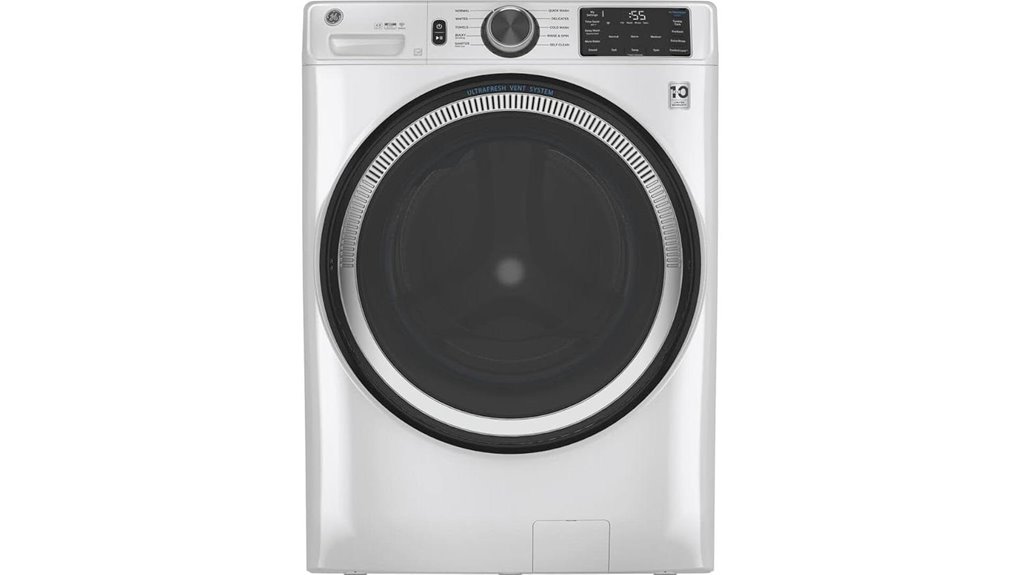
GE Profile 28″ Smart Front Load Washer, White

white ge 28 washer

If you’re juggling a packed schedule and a tight kitchen layout, the GE Profile 28‑inch Smart Front‑Load Washer is built to meet both demands.

You’ll appreciate the 4.8‑cubic‑foot capacity that handles bulky loads, while the 1300 RPM spin keeps garments lighter. The fits most laundry rooms without electrician hookups. Buttons let you choose from ten cycles, including Quick Wash and Time Saver. Wi‑Fi ties into GE SmartHQ, so you can start, stop, and receive alerts on your phone afar. Dispensers streamline loading, and OdorBlock tech keeps the tub fresh. A 10‑year warranty and 30‑day return promise give peace of mind.

Best For: busy families looking for a smart, spacious washer that’s easy to control from their phone and offers a long warranty with a hassle-free return policy.

Pros:

  • 4.8‑cubic‑foot capacity and 1300 RPM spin keep bulky loads lightweight and clean efficiently.
  • Built‑in Wi‑Fi and GE SmartHQ integration allow remote start, stop, and real‑time notifications.
  • 10‑year limited warranty and 30‑day voluntary return guarantee add peace of mind.

Cons:

  • The unit’s 246‑lb weight requires a sturdy floor and careful handling during installation.
  • Limited to a 32‑inch width, it may not fit in very narrow laundry spaces.
  • Requires a dedicated outlet and standard front‑load plumbing; no wireless power or mobile charging feature.

https://www.amazon.com/dp/B086H295YZ

WH22X37840 Replacement Control Board, GE/Kenmore

ge kenmore control board

You’ll appreciate the WH22X37840’s razor‑sharp timing control—a must for GE/Kenmore front‑control washers that demand consistent cycle sequencing. Made by FineParts, the 13‑oz board fits models like GFW850SPN1DG, PFW955SPW0GN, and GFW650SSN4WW. It powers wash, rinse, spin, temperature, and timing functions, keeping your cycles precise and your machine reliable. When the washer stalls, displays error codes, or mis‑syncs, swapping this board restores smooth operation. Installation takes just a few minutes—unplug, unscrew the old board, hook up the harnesses, and latch this one in. No batteries needed, and a 30‑day return window covers any defects or compatibility issues. See the difference today.

Best For: homeowners needing a quick fix for GE/Kenmore washer stalls, and appliance repair technicians servicing front‑load models.

Pros:

  • Reliable timing precision that restores smooth cycling.
  • Easy, no‑drill installation—just unplug, replace, and reconnect harnesses.
  • 30‑day return window protects against defects or mismatch.

Cons:

  • Compatible only with a specific subset of GE/Kenmore front‑load models.
  • No included batteries—must supply any required power components separately.
  • Requires basic electrical knowledge; may be tricky for novice DIYers.

https://www.amazon.com/dp/B0FY1SQ9FD

Equator 1.9 Cu.Ft Front Load Washer

equator 1 9 cu ft washer

Thanks to its built‑in automatic water sensor, the Equator 1.9‑cubic‑foot front‑load washer delivers the exact amount of water each load needs, making it ideal for apartment dwellers who want to stay green without compromising wash quality. Your 1400‑RPM drum cleans clothes fast, and the 165‑°F hot‑water option kills bacteria. A <60‑dB cycle keeps noise low, ideal for apartments. The touch‑display plus dial lets you’ll pick Normal, Prewash, Heavy, ECO, or Quick. Add‑a‑sock saves on single loads, while a child‑lock and memory presets offer convenience. Stainless‑steel construction feels solid, and the 30‑day return guarantees risk‑free testing for your daily peace.

Best For: apartment dwellers and small households looking for a quiet, water‑efficient front‑load washer that offers powerful cleaning and user‑friendly controls.

Pros:

  • Automatic water sensor delivers the exact water quantity needed, cutting waste.
  • 1400 RPM agitation with 165 °F hot‑water options ensures a deep, sanitizing clean.
  • <60 dB operation, child lock, and memory presets keep the washer easy and quiet to use.

Cons:

  • 18 lb (1.9 cu ft) capacity is limited for larger loads or families.
  • Lacks Wi‑Fi or smart‑home connectivity, offering only basic manual controls.
  • Short 30‑day return window and modest warranty compared to some competitors.

https://www.amazon.com/dp/B095X4YMZ2

Kenmore 4.5 cu ft Front-Load Steam Wash

kenmore 4 5 cuft steam wash

The Kenmore 4.5‑cu‑ft front‑load steam washer is the go‑to choice for apartment dwellers who need a tight, yet powerful appliance.

You’ll appreciate its 4.5‑cu‑ft stainless‑steel drum, fitting neatly at 27 by 34 inches while still handling a full load. The touch‑knob interface shows an LED timer and lets you pick from twelve cycles, including a quick 25‑minute Express or a deep‑cleaning Sani Rinse. Steam Treat blasts high‑temperature vapor to lift stains, and Accela Wash speeds normal loads 26 % faster. ENERGY STAR certification cuts power use, and the cold cycle saves up to 90 % energy versus warm washes. everyday routine.

Best For: apartment dwellers who need a compact yet powerful washer with advanced steam and energy‑saving features.

Pros:

  • Spacious 4.5‑cu‑ft stainless‑steel drum fits full loads in a small footprint.
  • Steam Treat and Accela Wash lift stains and cut cycle time by up to 26 %.
  • ENERGY STAR certified, with cold cycles saving up to 90 % energy versus warm washes.

Cons:

  • Heavy at 216 lb, requiring solid floor support for freestanding installation.
  • Limited to a one‑year appliance warranty (extendable through service center).
  • The compact capacity may not meet needs for very large or bulky laundry volumes.

https://www.amazon.com/dp/B0DFF3RZDB

Whirlpool W11319991 OEM Front Load Washer Electronic Control Board

whirlpool oem front board

If you’re looking to keep a front‑load washer humming, the Whirlpool W11319991 OEM electronic control board is the right pick. With a lightweight 1.25‑lb board and a 7×8.37×31.25‑inch footprint, you’ll swap it into most models—including KUIX535HPS, KUIX335HPS, KUIX305ESS, KUIX505ESS, and WUI75X15HZ—following the manual disassembly diagram. The replacement takes about twenty minutes; no batteries or special tools are needed—just hand tools and patience. Protect the warranty by unplugging the unit, turning off the circuit breaker, and shutting off water first. Afterward, keep odors at bay monthly with Affresh® tablets. A one‑year warranty and Amazon return give peace of mind today.

Best For: homeowners or repair technicians needing a quick, OEM replacement control board for Whirlpool front‑load washers to avoid downtime.

Pros:

  • Lightweight 1.25 lb board with a compact 7 × 8.37 × 31.25‑inch footprint.
  • Simple hand‑tool installation with no batteries or special tools required.
  • Comes with a one‑year manufacturer warranty and Amazon’s 30‑day return guarantee.

Cons:

  • Compatible only with a limited set of Whirlpool models (e.g., KUIX535HPS, KUIX335HPS, KUIX305ESS, KUIX505ESS, WUI75X15HZ).
  • Lacks built‑in diagnostic features to troubleshoot other washer issues.
  • Requires manual removal of preceding components; not a drop‑in plug‑and‑play part.

https://www.amazon.com/dp/B0DSW41TW4

BLACK+DECKER 4.5 Cu ft Front Load Washer

black decker compact 4 5 cu washer

Looking for a front‑load washer that trims space yet handles your deepest jeans, the BLACK+DECKER BFLW45M does just that. Its 4.5‑cubic‑foot drum lets you toss large loads without overstuffing, while the stainless‑steel construction guarantees durability. Control is easy with touch‑panel buttons, an LED display, and 12 cycle options from normal to 10‑minute wash, plus a full 24‑hour delay. 5 spin speeds range from no spin to 1,300 RPM, letting you save water or speed up drying. Energy‑star certification means lower utility bills, and the auto‑unbalance sensor keeps noisy spins in check. It balances performance, space, and value for your home.

Best For: families and small households that need a spacious, durable front‑load washer for heavy or large loads, and appreciate easy touch‑control operations and energy‑saving features.

Pros:

  • 4.5‑cubic‑foot stainless‑steel drum holds large, heavy laundry without overstuffing.
  • Energy‑Star certification and multiple spin speeds reduce water and electricity usage.
  • 12 cycle options and a full 24‑hour delay give flexible, user‑friendly wash schedules.

Cons:

  • Hefty 216‑lb weight makes installation and relocation difficult.
  • Generic 1‑year limited warranty offers limited long‑term protection.
  • Lacks smart‑home connectivity and advanced diagnostics found in higher‑end models.

https://www.amazon.com/dp/B0D4282T95

Magnetic Front Load Washer Door Stand – White

white magnetic washer stand

Need to keep your front‑load washer dry? The Magnetic Front Load Washer Door Stand – White holds your door ajar, boosting drum airflow, cutting residual moisture, and keeping interiors fresh. Its magnetic base grips metal frames firmly while the flexible hose adjusts to any door angle. Rubber‑coated magnet and hose shield the door from scratches, rust, and wear, all without vibration. Installation is tool‑free: snap the base, stretch the hose, release the door, and it stays. Re‑position by pulling the hose near the base. It fits most metal‑framed washers; stainless‑steel or plastic frames won’t stick. The 1‑year warranty covers you today.

Best For: homeowners with front‑load washers who want to keep the drum dry and fresh by holding the door slightly open.

Pros:

  • Powerful magnetic base provides a secure, vibration‑free hold.
  • Flexible, rubber‑coated hose protects the door and adapts to any angle.
  • Tool‑free, quick installation and repositioning for easy use.

Cons:

  • Only works on metal‑framed washers; stainless‑steel or plastic doors won’t latch.
  • Small size may be less noticeable and can occasionally detach if over‑tensions.
  • Build quality feels budget‑grade, which may affect long‑term durability.

https://www.amazon.com/dp/B092CM56W1

Factors to Consider When Choosing a Front‑Control Washer

When you pick a front‑control washer, first gauge its capacity and size to match your load needs and the space you have. Then compare spin‑speed ranges, water efficiency, and noise levels to balance drying performance with energy use and quiet operation. Finally, check the warranty coverage to protect your investment and understand the support you’ll get if anything goes wrong.

Capacity & Size

Choosing the right capacity for your front‑control washer means balancing the amount of laundry you’ll load against the unit’s footprint. A 4–5 cu ft washer takes about 20–24 lb of clothes, so you can toss in a comforter or winter coat in one cycle. Its dimensions—roughly 27 in wide, 34 in deep, and 39 in tall—require a 3‑in clearance all around for airflow and maintenance. Remember that fully loaded, the machine weighs 180–250 lb; check your flooring or platform can bear that load, especially if you need to lift it up stairs. The 54–55 in door opening keeps fabric free‑air circulation, reducing mildew. Small‑cap models stay thinner but use a 38–40 in drum to keep spin power stable in their reduced volume. Eliminate space worries by picking the right capacity for your routine.

Spin Speed Range

How fast should your drum spin? Front‑load washers usually spin between 1,000 RPM and 1,400 RPM, with 1,200 RPM a common default for 4.5‑cubic‑foot models. A higher spin speed cuts drying time but also amps up noise and can wear delicate fabrics, so set 1,000 RPM or lower for garments prone to abrasion. Energy‑efficient units often moderate to 1,100 RPM or 1,200 RPM to lower electrical draw, while heavy‑duty models may hit 1,300 RPM‑plus for maximum water extraction. Drum size ties into limits: a 5‑cubic‑foot unit supports up to 1,400 RPM, while a 3‑cubic‑foot machine tops out around 1,050 RPM. Hand‑adjustable settings let you choose between a “high spin” (~1,350 RPM) and a “low spin” (~950 RPM), striking a balance between moisture removal and fabric care. Choose to match your laundry habits and fabric types.

Water Efficiency

Because front‑load washers typically use 30–40 % less water per cycle than comparable top‑loads, you’ll see 10‑15 % savings on your monthly bill. ENERGY STAR models cap water use at 25 gallons for a 12‑cycle run, so a 5‑cycle bleach wash ends up using just 10–12 gallons. Load‑sensing tech slices water need by up to 30 % by measuring each load’s exact weight. High spin speeds—1,200 to 1,400 RPM—pull out more moisture, letting you trim rinse water by 15–20 % without sacrificing clean. The compact, sealed drums lock in water, reclaiming up to 95 % of it each cycle. These efficiencies mean you use less water, lower strain, and curb your household’s impact. Choosing a washer with load‑sensing, high spin speeds, and a sealed drum guarantees better water conservation and clothes.

Noise Level

As you weigh a washer’s water economy, you’ll also want to know how loud it will be during operation. Typical front‑load machines sit between 45 dB and 60 dB when you measure inside the housing; models that stay below 55 dB feel almost whisper‑quiet. Spin speed is the chief culprit: a 1400 RPM spin can be 5–10 dB louder than a 1200 RPM one on the same load. Dual‑motor or electric‑bipolar designs shave 3–6 off that baseline, while vented drum housings, rubber door gaskets, or isolation pads cut vibration noise by another 2–4 dB. If you need an apartment‑friendly run, look for low‑noise cycles that stay at 800–1000 RPM and hydrate the drum. These quieter models often allow you to run them in bedrooms without disturbing late‑night guests quietly daily always.

Warranty Coverage

When you shop for a front‑load washer, the length of the manufacturer’s warranty gives a quick glimpse of how much confidence the brand has in its components.

Typical coverage runs from 1 to 10 years, with premium models offering the longest terms. The standard plan protects against motor, control board, drum, belt, and heating element defects but excludes cosmetic damage. Many brands sell add‑on plans that can double the period and add drain hoses or water valves to coverage. Just remember that overstating the load, ignoring filters, or using harsh chemicals voids the warranty unless explicitly covered. To claim, keep your receipt, register within 30 days, and document any repair you received to keep your appliance running smoothly for years and reduce costly repairs.

Smart Connectivity

If you want to make the most of your washer, connectivity matters. Wi‑Fi lets you start, pause, or stop cycles from your phone—even when you’re not home. Real‑time status updates and fault alerts land directly on your device, so you can troubleshoot or schedule service before issues spill over. Some models share energy‑usage reports, revealing kilowatt‑hour consumption per cycle and pointing you toward more efficient routines. Voice‑assistant integration—Alexa, Google Assistant, or Siri—enables hands‑free cycle selection, timer tweaks, and progress checks. And for the eco‑savvy, remote sensing detects load weight, automatically optimizing water use to avoid waste while guaranteeing a balanced wash. This integration also syncs with your calendar, reminding you of pending loads and ensuring you never miss a cycle, and maximize daily savings.

Control Flexibility

Choosing a front‑control washer isn’t just about size or price—it’s about the flexibility you’ll have over every wash cycle. With a simple push‑button panel, you can hit a single cycle and trust that the machine will pull the right amount of water. If you crave deeper customization, a touch‑screen lets you program up to twelve distinct cycles, tweak spin speeds, and dial the water from cold to extra‑hot. Smart‑home support expands this control to your phone, where you can start, pause, or monitor progress, and even diagnose error codes remotely.

Sensor‑driven modes adjust water, spin speed, and time based on load weight and fabric type. Manual levers or foot‑pedal switches let you choose an express wash or full routine on the fly, you need.

Installation Options

Any front‑control washer you pick needs a floor space of at least 34 in. wide by 32 in. deep, plus a 1‑ to 2‑inch clearance underneath for airflow. You’ll need a 45‑ to 55‑in. drop‑in water hose, threaded at 3/4″ for hot and cold. A 60‑ to 90‑in. drain line should run to a floor drain or stand‑pipe that exits above your washer to stop backflow. Give the unit a 120‑V 15‑A circuit, with a grounding receptacle and a GFCI or AFCI breaker to satisfy code. If you opt for a freestanding model, you can set it on stairs or over cabinets, but you must confirm the surface supports 180–250 lb of weight—or place it on a lower level. You’ll avoid damage and keep the machine safe.

Frequently Asked Questions

What Is the Typical Lifespan of a Front-Control Washing Machine?

Typically, a front‑control washing machine lasts around ten to twelve years, depending on usage, maintenance, and brand quality. You’ll notice reduced performance around the eighth or ninth year. Regularly cleaning the lint filter and avoiding overloading preserves its lifespan. If you plan a replacement, consider energy efficiency and features, and choose a model that aligns with your laundry habits. Do so promptly to avoid repairs and enjoy longer loads daily.

Do Front-Control Washers Use Less Water Than Mid-Top Models?

Front‑control washers usually use less water than mid‑top models. They’re designed for higher spin speeds and tighter drum volumes, so each cycle draws in only what’s necessary. Mid‑top units often have larger, more loosely fitted drums, which can let in extra water during rinse cycles. If water efficiency matters to you, a front‑control model will typically keep consumption lower while still cleaning effectively and you can save and reduce bills.

How Do I Troubleshoot a Restarting Cycle on a Front-Control Washer?

Like a hummingbird’s wings beating in a steady rhythm, you’ll spot a restarting cycle when the washer pauses briefly and then resumes. First, unplug and wait 10 minutes—letting the electronics reset. Check the door latch: a loose seal triggers safety pause. Inspect the water inlet valve for clogs. If the cycle still restarts, replace the electronic control board, and you’ll be back to clean clothes. At that point it’s ready.

Can I Use a Front-Control Washer in a Small Apartment?

Yes, you can fit a front‑control washer in a small apartment if you pick a compact model. First, measure your space, check that the door swings open without hitting the wall. Then, choose a unit that’s tall, but narrow enough to fit under a window or between a bed and a closet. Hang towels on a hook nearby to tidy. You’ll also want a quiet, low‑energy model to keep noise down.

What Energy Efficiency Rating Should I Look for in Front-Control Washers?

Think of your washer as a well‑tuned orchestra, each button a note that keeps harmony. When choosing one, look for an Energy Star certification or at least an A+ EER rating; that marks it as a low‑energy savior. The lower the power coefficient, the less electricity you’ll pay, just like a lean engine that still runs smoothly. Stick to models boasting a 30%‑higher efficiency than the 2010 baseline for you.

Conclusion

Imagine stepping into a crisp, quiet kitchen where the washer hums softly, its front‑control panel glowing like a calm lantern. As you glide a load through, the machine’s sleek design becomes a gentle companion, turning laundry into a serene ritual. Trust these top‑rated washers to keep your garments fresh, your time valuable, and your space elegantly organized. Let the familiar glow guide your daily chores toward a more effortless, comforting routine, and gentle warmth today.