Garden Irrigation Hub Every Backyard Needs

Introducing Maria, our meticulous planner and talented visual storyteller. She has a knack for discovering those hidden gems, chic boutique spots, and charming little cafes that add a touch of elegance to every journey. With her keen eye for photography and her passion for travel, Maria will transport you to the most enchanting corners of the world, inspiring you to explore new places, one picture-perfect destination at a time.
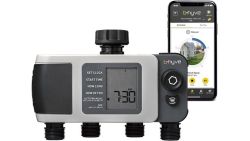
You can transform your garden with a smart hub like Orbit 24634 B-hyve XD, a 4‑port Wi‑Fi, Bluetooth controller that syncs zones, cuts waste, and alerts you to weather. It offers six‑adjustable settings, drought‑boost logic, and a 30‑day return policy. Your dripped‑soaked system works with Rain Bird MANIFRE6S manifold that lets unregulated flow feed 6 outlets. You’ll enjoy Alexa voice control, timers, and water‑metering. Curious about which hub balances price, range, and features? Keep going to find out.
Key Takeaways
- A hub synchronizes all zones, permitting centralized control via Wi‑Fi or Bluetooth and setting individual watering schedules for each zone.
- Smart hubs use hyper‑local weather data and drought indices to automatically trim run times, saving water and staying EPA WaterSense‑certified.
- Voice‑assistant integration (Alexa, Google Assistant) lets users start or pause irrigation cycles without leaving the garden.
- The 2.4 GHz radio link and optional 12‑V backup power ensure reliable operation even when Wi‑Fi or primary batteries run low.
- Expandable manifolds and barbed outlets allow easy adding of drip lines or sprinklers, giving gardeners flexibility to grow any plant type.
Orbit 24634 B-hyve XD 4-Port Smart Hose Watering Timer

Looking to manage multiple hoses without juggling cords? The Orbit 24634 B‑hyve XD 4‑port timer lets you program each line via Wi‑Fi, Bluetooth, or its touch screen. It offers six adjustable settings—duration, frequency, etc.—and its 2.0 Hub syncs everything. The timer adapts to live weather, drought levels, and respects restrictions you set. Paired with a Wi‑Fi hub, it earns EPA WaterSense certification, cuts waste using hyper‑local data, and trims run time during dry spells. Made in plastic, it’s IPX‑5 waterproof, 1‑inch tall, 4‑inch screen, and only eight ounces. A 30‑day return guarantee and manufacturer warranty give you peace today.
Best For: homeowners who manage multiple hose lines and want automated, weather‑smart watering that cuts waste while respecting local restrictions.
Pros:
- Intuitive multi‑port control via Wi‑Fi, Bluetooth, or touch screen
- Adaptive scheduling that trims run time during droughts and uses hyper‑local weather data
- EPA WaterSense certification (with Wi‑Fi hub) guarantees water‑saving performance
Cons:
- Full WaterSense certification requires a separate Wi‑Fi hub, adding cost and setup steps
- The compact plastic housing feels less premium than metal models
- Warranty is only 30‑day Amazon return; extended support requires contacting Orbit directly.
https://www.amazon.com/dp/B0B1QWVQPY
Rain Bird MANIFRE6S Drip Irrigation 6-Port Manifold, Unregulated Free Flow

If you’re building a drip network that serves up to six zones, the Rain Bird MANIFRE6S delivers a simple, unregulated free‑flow manifold that lets you hook six 1/4‑in. drip tubes straight to a single 1/2‑in. riser in minutes.
Made from plastic, it measures 1.43 × 1.21 × 2.5 inches and tolerates up to 40 psi, making it durable on lawns. Deployment is quick: attach the 1/2‑in. NPT top to your pressure‑regulated source, then thread the 1/4‑in. barbed outlets into drippers, emitters, or micro‑sprays. If you need underground pop‑ups, use the RCKIT‑1PS kit. With optional 1/4‑in. tees, you can expand each outlet to several devices, maximizing efficiency.
Best For: Small to medium drip irrigation networks that require a quick, unregulated, free‑flow manifold for up to six ¼‑inch water lines.
Pros:
- Compact 1.43 × 1.21 × 2.5‑in. design saves space and simplifies installation.
- UV‑ and chemical‑resistant plastic construction tolerates up to 40 psi, ideal for residential and small commercial lawns.
- Self‑flushing barbed outlets reduce clogging and maintenance downtime.
Cons:
- Requires a pressure‑regulated source; not suitable for true 100 % free‑flow systems.
- Limited to six ¼‑inch outlets unless additional tees are used, which increases parts.
- No adjustable flow setting—holds fixed at free flow, which may restrict fine‑tuned irrigation schedules.
https://www.amazon.com/dp/B003MZ1ESW
Smart WiFi Hose Timer, Alexa Compatible, 20 Plans

For busy homeowners who want to keep their garden thriving without lifting a finger, the Smart WiFi Hose Timer is the perfect solution. It plugs into your hose, disappears without a visible cable, and connects via 2.4 GHz Wi‑Fi; if the hub goes offline, Bluetooth keeps it running within 60‑70 ft. Use the Smart Life app to view watering history, battery status, and weather‑delay alerts, and schedule 20 plans—from 10 normal to 10 soak‑cycle modes. Alexa and Google Assistant give hands‑free control, and four alkaline AAA cells last durably more than six months and trigger a low‑battery alert when below 20 %.
Best For: busy homeowners who want automated gardening.
Pros:
- Seamless integration with Wi‑Fi and Alexa/Google Assistant for hands‑free control.
- 20 programmable schedules, including dual‐mode soak cycles, enable precise watering.
- Low‑power, battery‑driven design gives over six months of operation with a simple battery‑low alert.
Cons:
- Requires 4 × AAA batteries (not included), adding recurring cost.
- 2.4 GHz Wi‑Fi required; may struggle in areas with weak signals.
- No independent power source, so must remain near a power outlet for battery replacement.
https://www.amazon.com/dp/B0F5Q887L8
RAINPOINT 2-Zone WiFi Water Timer & Sprinkler

Need a smart irrigation hub that keeps your lawn lush while trimming your water bill?
With the HWG023 gateway, you’ll connect via 2.4 GHz Wi‑Fi, covering up to 250 m—good through several walls—and pair one unit with up to eight RAINPOINT sensors and valves.
The brass inlet, metal filter, and upgraded valve coil give you a 116 PSI‑rated, heat‑and‑sun‑resistant system that stays IP65 sealed, so you avoid leaks and extend lifespan.
Program up to six watering plans on two zones, choosing from normal, cycle‑and‑soak, or misting modes, and schedule odd, even, interval, or custom days.
Weather logic adds delays and drought boosts.
Best For: homeowners who want a compact, Wi‑Fi‑controlled irrigation system that can monitor multiple zones, adjust watering automatically for weather and drought, and integrate with smart‑home assistants.
Pros:
- 2‑zone flexibility with up to 6 customized watering plans per zone.
- Weather‑based rain delay and drought‑boost logic reduce water waste.
- High‑precision ±5 % flow meter with 24‑hour monitoring and instant alerts.
Cons:
- Requires a 2.4 GHz Wi‑Fi connection only—no 5 GHz support.
- Limited to eight devices per gateway, which may be insufficient for larger properties.
- 1‑year warranty, shorter than some competitors.
https://www.amazon.com/dp/B0G6D54SRF
Lumary WiFi Water Timer with Hub & Alexa

Its hub plugs into your 2.4 GHz WiFi, letting you control everything from the Lumary app, an on‑demand button, or Alexa voice—no wiring or hard‑wiring needed. You pair the device via the app, then manage regular or cyclical schedules—five adjustable settings, start times no earlier than 00:05, and a 24‑hour shut‑off. Manual mode gives instant watering, while rain‑delay daily auto‑skips runs for 24, 48, or 72 h based on local weather data. The IP55‑rated hub powers through a USB gateway, ships at 6.4 oz, and supports two‑zone battery setups. With a 30‑day return policy and warranty, it keeps lawns healthy winter‑freeze risk.
Best For: homeowners who want easy, Wi‑Fi‑controlled lawn watering with voice integration and automatic rain‑delay weather adaptation.
Pros:
- Convenient app and Alexa control for hands‑free scheduling.
- Weather‑adaptive rain‑delay saves water and reduces maintenance.
- Compact, lightweight design with 2‑zone battery flexibility.
Cons:
- Requires continuous 2.4 GHz Wi‑Fi; no power in winter freeze conditions.
- Limited to 24‑hour watering periods; no advanced scheduling depth.
- Not fully submersible—only dust‑protected, not suitable for heavy spray.
https://www.amazon.com/dp/B0F2T8N2CQ
Orbit Adjustable Flow Drip Irrigation Manifold

Whether you’re a container gardener or tending a tight‑tiled raised bed, the Orbit 67000 8‑port manifold lets you control each drip line with a quick twist—its adjustable flow dial fits every plant’s water needs while its compact 2‑in. Designed for point‑source spot watering, the manifold supports up to eight ¼‑inch drip lines and plugs straight into your existing 1/4‑in. tubing. Its 360° rotating barbs keep connections snug, while threaded caps shut unused ports, saving water. A quick‑access filter port lets you keep flow clean, and the manual flow dials pair nicely with Orbit’s B‑hyve smart controller for on‑demand scheduling.
Best For: small‑bed growers and container gardeners who need quick, adjustable water flow for multiple plants in tight spaces.
Pros:
- Compact 2‑in. design fits easily into narrow beds or hosing spaces.
- 360° rotating barbs keep ¼‑in. connections tight and reliable.
- Adjustable flow dials and threaded caps allow precise, water‑sparing control for each line.
Cons:
- Made of plastic, which can be less durable than metal manifolds.
- Manual flow dials may lack the precision of pressure‑loss controllers.
- Requires a separate pressure regulator and filter for optimal performance.
https://www.amazon.com/dp/B08SPZHKKZ
WiFi Smart Water Timer for Garden Hose

Want to keep your garden thriving without lifting a finger? You’ll love the Insoma Wi‑Fi smart water timer. Plug it into your 2.4 GHz hub and control every outlet via the app, Alexa, or Google Assistant. Two coaxial ports let you set up to twenty watering programs—timed starts, durations, and odd‑or‑even weekly cycles—plus on‑demand, unlimited manual sessions. Rain‑delay pauses up to seven days and auto‑resumes. Scale the system to thirty‑two timers, share control with family, and enjoy brass plumbing fittings and a tiny 1.28‑lb body. Use it to cut water waste and boost plant health. Warranty backs the whole product.
Best For: homeowners with a garden who want hands‑free watering, voice‑controlled schedules, and the ability to scale to multiple zones.
Pros:
- Dual outlets that support up to 20 watering programs and a rain‑delay feature that can pause watering for 1–7 days.
- 2.4 GHz Wi‑Fi connectivity with a hub and app, plus Alexa and Google Assistant voice commands for effortless control.
- Expandable to 32 timers from a single hub, family‑member sharing, brass plumbing fittings, and a lightweight 1.28‑lb body for easy installation.
Cons:
- Limited to 2.4 GHz Wi‑Fi only—no 5 GHz or Bluetooth support.
- Each device tops out at 20 programs; larger gardens may need additional hubs to reach the full 32‑timer capacity.
- Requires a separate hub and manual plumbing connection, adding a small installation step compared to standalone models.
https://www.amazon.com/dp/B0DZGV78VJ
MOES 2‑Zone WiFi Sprinkler Timer with Hub

If you’re juggling two distinct garden zones, the MOES 2‑Zone WiFi Sprinkler Timer let’s you keep each area hydrated on its own schedule.
Tap the app to assign individual schedules to each brass inlet, or let the timer switch between zones automatically.
When rain arrives, your timer pauses watering for up to seven days, then resumes automatically.
Its IP55 rating guards against splashes, dust, and UV exposure, while a rubber gasket keeps internal water out.
Made from durable brass and pure copper, it endures 7.25–116 psi pressure and 40–113 °F temperatures.
Four AA batteries power this lightweight 0.4‑lb compact hub.
Best For: homeowners with two separate garden sections who want independent, app‑driven watering schedules and automatic rain delays.
Pros:
- Dual‑zone control allows tailored watering for different plants or lawn areas.
- Battery powered (4 × AA) for hassle‑free installation anywhere.
- IP55 rating and brass/copper build ensure durability against weather and pressure.
Cons:
- Limited to only two zones – not suitable for larger, multi‑zone gardens.
- Requires separate WiFi/Bluetooth setup; may struggle in weak signal areas.
- No explicit warranty duration listed; service support details unclear.
https://www.amazon.com/dp/B0GMVZW7M7
2-Zone WiFi Water Timer with Alexa Control

Dreaming of a garden that waters itself? You’re in luck—the Zone WiFi Water Timer delivers on that promise. Its brass swivel inlet and gray housing resist sun and leakage, while the two outlets let you split the yard into independent zones. Connect it to Wi‑Fi and use the Smart Life app for scheduling, viewing, on‑demand watering. Alexa voice commands toggle the circuit instantly. With timed, cyclical, or manual modes, set start times, durations, week cycles, odd/even days, and rain delays up to seven days. One gateway supports 32 timers, and family members can join the app. Total settings: 42.
Best For: Busy homeowners who want fully automated, voice‑controlled irrigation for one or two garden zones.
Pros:
- Durable brass swivel inlet resists sun, heat, and leaks for long‑term performance
- Full Wi‑Fi scheduling via Smart Life app plus Alexa voice control for instant on/off
- Flexible modes (timed, cyclical, manual) and up to 7‑day rain delay for variable weather
Cons:
- Relies on a stable Wi‑Fi connection; no offline backup option
- Limited to only two zones, so larger gardens need a separate gateway
- Initial setup and configuration can be a bit involved for non‑tech users
https://www.amazon.com/dp/B0F6JRJ75S
RESTMO Smart Dual‑Zone Sprinkler Timer with Flow Meter

Ever wonder how one device can keep both your front lawn lush and your backyard garden thriving without you juggling hoses? With RESTMO’s Smart Dual‑Zone Timer, you manage each zone separately through a Wi‑Fi app, even scheduling up to eight programs per zone for intervals, weekly, odd‑or even‑day waterings. Its flow‑metering feature records exact usage, auto‑shutting when pressure drops after 3 minutes, so you never over‑water your soil, while the brass connections and IP55 rating guarantee long‑term corrosion resistance. A one‑touch button lets you start watering for 1‑24 hrs, and rain‑delay settings pause the system for 72 hours during wet spells.
Best For: homeowners who need to water separate front and back yard zones simultaneously and want remote, rain‑delay, and flow‑metered control.
Pros:
- Dual‑zone outlets let you run independent programs for lawns, gardens, or plant types.
- Integrated flow meter records precise usage and auto‑shuts after 3 min if pressure drops.
- Wi‑Fi + RF hub plus a one‑touch button give flexible on‑demand watering from anywhere.
Cons:
- Supports only 2.4 GHz Wi‑Fi, limiting use with 5 GHz‑only routers.
- Flow‑meter auto‑shut is not applied to soaker hoses, potentially under‑watering such systems.
- Requires a separate RF hub; if the hub fails, the timer loses connectivity.
https://www.amazon.com/dp/B0F1S4SLVK
SONOFF Zigbee Sprinkler Timer – Alexa & Google Control

The SONOFF Zigbee Sprinkler Timer turns your garden into a smart sanctuary, letting you control watering schedules right from Alexa or Google Home—so any homeowner with a Zigbee hub can skip the manual hassle.
You attach it near your irrigation control and tap its buttons to pick one of five preset watering strengths. The body weighs 0.61 lb, spots. Via Zigbee, it plugs into your hub—Alexa or Google Home can start or adjust schedules with a command. Program gardens, lawns, or pools, cut water waste, and save effort. SONOFF offers a warranty, and reviews average 3.9 out of 5, showing value.
Best For: homeowners who own a Zigbee hub and want quick, voice‑controlled irrigation with minimal setup.
Pros:
- Five programmable presets for effortless watering customization
- Voice control via Alexa or Google Home for hands‑free scheduling
- Compact, lightweight design that fits easily near irrigation control
Cons:
- Requires a separate Zigbee gateway or hub
- Customer rating only 3.9 / 5, indicating mixed user experience
- Limited to five preset settings—no granular adjustment or app integration
https://www.amazon.com/dp/B0D5B8S8N8
Smart WiFi 2-Zone Hose Timer with Alexa

If you want to water your lawn and greenhouse without ever stepping outside, the Smart WiFi 2‑zone hose timer gives you Alexa‑powered voice control and independent scheduling for each outlet. Tap the Smart Life app to set up two programs; each outlet supports up to five schedules. Choose irrigation or spray modes, tweak runtime and cycles. Control works via panel, while Alexa or Google Assistant can start, pause, or stop watering instantly. The IP55‑rated device has a 0.53‑kg plastic body and a 24‑72‑hour rain‑delay feature powered by weather data. Activity logs record each cycle’s start, duration, and end times.
Best For: Homeowners with small‑to‑medium lawns or greenhouses who want hands‑free, individually scheduled watering with voice control and weather‑based rain delays.
Pros:
- Independent scheduling for each of the two outlets with up to five programs per outlet.
- Alexa and Google Assistant integration allows instant start, pause, or stop via voice.
- Weather‑enabled rain‑delay feature (24/48/72 h) and activity logs for precise tracking.
Cons:
- Only two zones; not ideal for larger gardens requiring more outlets.
- Built from plastic and rated IP55; might feel inexpensive and could be less durable.
- Requires a stable 2.4 GHz WiFi connection and a Smart Life app; no local network fallback.
https://www.amazon.com/dp/B0D3TC568K
YoLink Smart Sprinkler Timer (YS4103)

For busy homeowners who demand precision watering, the YoLink Smart Sprinkler Timer (YS4103) lives up to its promise. Its IP66 design offers rugged, waterproof housing ideal for gardens, lawns, or small farms. You can choose Duration mode for fixed on/off times, Volume mode for exact water output, or ECO mode, which pauses during rain and resumes automatically. A built‑in flow meter tracks real‑time flow and total usage. LoRa connectivity works up to 400 m without Wi‑Fi; the hub bridges to cloud. With 180‑day history, you control everything via the YoLink app or a button for precise control and monitoring efficiency.
Best For: busy homeowners and small‑farm operators who want precise, weather‑aware watering without complex Wi‑Fi setup.
Pros:
- IP66 waterproof design protects against harsh outdoor conditions.
- LoRa connectivity allows up to 400 m range without Wi‑Fi, simplifying setup.
- Built‑in flow meter and 180‑day history provide accurate usage tracking and data.
Cons:
- Requires a separate hub for cloud access, adding cost and setup steps.
- LoRa range may drop in heavily obstructed environments.
- Limited firmware update options and no modular feature upgrades.
https://www.amazon.com/dp/B0G38D5QZY
Factors to Consider When Choosing Garden Irrigation Hub
You’ll want to check that the hub’s connectivity supports your home network and any existing smart devices so you can avoid compatibility headaches. Make sure the system lets you mix and match legacy irrigation controls or other smart home platforms, giving you flexible integration options. Also review its energy use, clear pricing, and how often firmware gets updated to keep the hub secure and efficient.
Connectivity Compatibility
Connectivity is the heart of a garden irrigation system, and picking a hub that matches your network matters. If your home router runs 2.4 GHz, a hub that only uses 5 GHz may cut off your water‑control range; choose a unit that covers 30–100 m in open space to match your yard. Look for support for several protocols—Bluetooth, Zigbee, Z‑Wave, or LoRa—because they’ll let you plug in any smart sensor and keep the network alive even when Wi‑Fi dips. A hub that caps linked timers at eight or sixteen limits future expansion; pick one that expands freely with just a single Wi‑Fi gateway. Keep firmware current via OTA, and opt for dual‑band Wi‑Fi or a Bluetooth fallback to guard against primary‑network hiccups for continued reliability through updates.
Integration Flexibility
Because a garden’s watering needs shift with seasons and sensor data, you’ll want a hub that doesn’t lock you into one protocol. Check that it speaks Wi‑Fi, Bluetooth, Zigbee, and LoRa; the more choices, the more sensors and smart home devices you can plug in. A high‑end model should expose an open API or webhook, letting you tie weather feeds or custom IoT data into your watering logic. If you need 32 separate zones, the hub should support that, allowing micro‑irrigation rigs to coexist with full‑garden sprinklers in one dashboard. Voice‑assistant compatibility also matters; the hub must expose standard skill interfaces so a simple “water the roses” command triggers instantly. Finally, flow‑metering and environmental inputs let you fine‑tune watering and override from your phone.
Energy Consumption
How much power will your garden hub swallow, and does that sit neatly under your energy budget? Even when idle, most hubs keep the draw below 0.5 W, and sleep mode cuts it to just a few milliwatts. A Wi‑Fi‑enabled model spikes to 1.5–3.0 W on active communication, but a 30‑minute duty cycle for routine updates keeps the average low. Battery timers using low‑power microcontrollers can survive six months or more on four AAA cells, thanks to power‑gating firmware. Switching from a wired source removes the 3–5 A surge, cutting instant loss. Mesh‑networked hubs share under‑200‑byte packets, keeping network traffic—and therefore extra energy—negligible. If you use solar panels, those bulbs can even regenerate power during daylight, ensuring your system stays self‑sufficient year after year. So easily, noticeably.
Cost Transparency
While that tiny power consumption keeps your monthly bill down, the real budget impact comes from the hub’s upfront and ongoing costs.
You’ll pay between $xx for the base unit and additional $25‑$45 for each extra valve you add.
Subscription tiers are billed monthly, ranging from $5 to $15, enabling real‑time weather data and advanced reports that help you diagnose problems early.
A professional install may sneak in an extra $10‑$20 fee per extra zone for wiring and regulation, so plan ahead.
Extend warranty can add $50‑$70, covering sensor failures; a full‑coverage plan saves you long‑term by reducing repair expenses.
Firmware Updates
When you pick an irrigation hub, you’ll want its firmware updates to ship over the air—so the system stays fresh without you having to lift a finger. Check the version history; a recent update date and a high patch count usually signal a vendor that actively maintains the device. Notice if the logs publicize CVE fixes—this transparency proves you’re not stuck with unpatched security holes. During OTA, the firmware should support graceful rollbacks or a golden image, letting you bounce back if a new version skids. Finally, verify that updates preserve API compatibility or clearly document how legacy devices should migrate, so your smart sprinklers stay connected for years. With these safeguards, you’ll enjoy uninterrupted, secure irrigation without tedious manual tweaks all around today.
Frequently Asked Questions
Can the Irrigation Hub Be Retrofitted Into an Existing Irrigation System?
Yes, you can retrofit a hub into your existing irrigation system. First, shut off your water supply and drain the line. Then, flush the system to remove debris so you can install the hub’s inlet fittings. After adding the hub, reconnect all downstream valves, adjusting flow so each zone receives proper pressure. Finally, run a test, tweak settings, and you’ll enjoy efficient, automated watering. And intelligently manage resources, saving both time and money.
What Maintenance Tasks Are Required for Long‑Term Hub Reliability?
Don’t dismiss routine checks as a waste of time; actually, neglecting them shortens your hub’s lifespan. Start by inspecting filters; you clean or replace them monthly. Check for leaks at connections, tighten valves, and replace corroded fittings. Test solenoids and valve actuators weekly, ensuring full open/close cycles. Monitor set pressures daily, calibrate sensors, and document changes each season. Finally, verify wiring integrity and replace properly any frayed conductors promptly today.
Does the Hub Support Manual Overrides During Power Outages?
Yes, you can manually override the hub when power fails. Switch the control panel to manual mode, and use the bypass switches to keep your irrigation running. The built‑in relay will let you maintain zone pressure, so your garden stays hydrated even when the grid goes down. You’ll remember to reset to automatic once electricity returns, and your system stays reliable. This feature saves you hassle during stormy weather too.
Can One Hub Control Both Hose and Sprinkler Zones Simultaneously?
Imagine this: your backyard turns into a symphony of water, and you’re its bewildered conductor. Yes, one hub can manage both hose and sprinkler zones simultaneously, letting you water the lawn, the driveway, and the random pumpkin patch all at once. Just hit the smart panel, and revel in the absurd efficiency—no more juggling hoses or buying extra controllers for each sprinkler whizbang. Water, you win the joy for you.
What Is the Battery Life of a Typical Smart Irrigation Hub?
Most smart irrigation hubs run on a rechargeable 18650 or 9V battery and last about 2‑6 months between charges, depending on usage and weather sensors. Some models include a solar panel, extending life to nearly a year. If you replace standard AA packs, expect roughly 6 weeks of operation at moderate watering schedules. Keep an eye on battery percentage to avoid shutdown and plan your recharge accordingly for uninterrupted watering away.
Conclusion
By choosing a Wi‑Fi‑enabled hub, you cut water waste, save on bills, and free time for garden fun. In a backyard in Boise, the H2Ohub Smart Timer synced with Alexa, reducing runoff by 30% during the first three months. You’ll enjoy precise schedules, remote tweaking, and seasonal alerts—all from your phone. The future of garden care is easy, efficient, and sustainable. Let the hub transform your watering routine today and bring the community garden vibrancy back.
Irrigation hub, Smart irrigation, Water savings